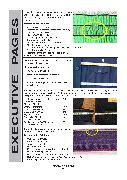
                                PAGESSkip Stitch: When the needle thread cannot catch
the looper thread tends to skip stitch. Most of the
time it occurs right before or right after the heavy
thickness.
Recommended Solution:
-
-
-
-
-
-
-
-
-
-
-
-Core spun thread may use.
Machine would not feed the fabric in back way.
Supervise feeding system.
Minimum thread tension.
Not to stop on the thick part of fabric.
Set ideal foot, feed and plate.
Machine should be correctly threaded.
Machine must be clean.
Needle should make hole properly (Hole not too large or short).
Needle not too fine for thread.
Machine trimming needs proper adjustment.
Fabric must be held properly.
Slanted: A type of defect that is set on an angle on
the topside of any garment.
EXECUTIVERecommended Solutions:
-Pattern must be accurate.
-Maintain proper marking procedure.
-Appropriate pressure foot.
-Observe sewing operators for correct material han-
dling technique.
SPI: SPI means Stitches Per Inch. This means number of stitches formed in one inch length of seam.
Generally buyer mention stitching SPI. Supplier supposed to follow that SPI in garment samples and
bulk product. Standard SPI for different types of machines:
Single/Multi Needle Lockstitch Machine
Blind Stitch Machine
Flat Lock Machine
Over Lock Machine
Button Hole Machine
Chainstitch Machine
Zig Zag Machine
Coverstitch Machine
Bartack Machine
Feed of the arm (FOA) Machine
Eye let hole Machine7-10
13-14
12-13
10-13
56
8-10
13-15
13
56
7-9
56
Stitch Breakage: Where inconsistency in seam ap-
pearance at bottom side of fabric.
Recommended Solutions:
-
-
-
-
-
-
-
-
-Use class full thread.
Proper size of thread.
Tension not too tight.
Needle set properly.
Machine must be clean and correctly threaded.
Needles need replacement.
Operator should not pull fabric during sewing.
No burns in needle eye, throat plate, guides thread spindle.
Proper adjustment of needle & looper.
NCM-APRIL 2020
30