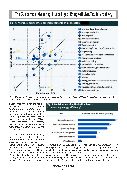
                                The Comparison, Measuring & Labelling of Energy-efficient Textile Machinery
(excluding the use of technology)
Ref. : The contribution of the mechanical engineering industry to energy efficiency, VDMA, Roland Berger Strategy consultants
(ed.), Results of the Study dated October 2009
These challenges for the textile
companies also offer more
opportunities to increase energy
efficiency, to reduce costs and to
increase competitiveness. With a
corporate policy which follows the Life
cycle cost approach (e.g. VDMA
Specification 34160) for investments,
the right decisions can be made in
many cases even from an ecological
perspective.
With their innovative technologies,
many German textile machinery
manufacturersarealready
successfully offering environmentally
friendly, energy and resource-efficient
solutions on the world market.
According to a study by Roland Berger
and the VDMA, increases in efficiency
of approximately 15 % were achievable
already in the last ten years through
the use of German textile technology– far more than was provided by the
corresponding use of technology in
most other manufacturing industries.
Manufacturers of machinery and
equipment for the textile industry are
therefore among the most innovative
sectors of the German plant and
NCM-APRIL 2020
52machinery construction industry – even
without a mutually agreed machine
label to identify the energy efficiency.
But this is no reason for the industry
to rest on its laurels. Continuous
development and innovation is,