                                The World and United States Cotton Outlook
jected to decline due to effects from
the past trade dispute and the outbreak
of the novel coronavirus (COVID-19).
Lower consumption has also pressured
import demand which is projected at
8.5 million bales. High levels of cotton
in consignment and industrial and com-
mercial stocks at the start of the mar-
keting year have also helped drive im-
ports lower. China stocks are projected
at 33.7 million bales, down from last
year with lower mill and commercial
stocks. State Reserve stocks are pro-
jected at 10.5 million, unchanged from
the previous year, as the State Reserve
is projected to auction old-crop sup-
plies and replace with both new-crop
domestic cotton and imports. State
Reserve sales in 2019 (conducted from
May to September) exceeded 4.5 mil-
lion bales, a level equal to the State
Reserve’s announced target.
2019/20 World Consumption, Trade,
Ending Stocks, and Prices
World cotton consumption in 2019/20
is expected to decline again and reach
119.0 million bales, a marginal 1.0 per-
cent decrease from the previous year.
Lower consumption is forecast in Chi-
na, Vietnam, and Indonesia, more than
offsetting gains for India, Pakistan, and
Turkey. Uncertain market conditions
have helped drive China’s consump-
tion down 2 million bales from the pre-
vious year, reaching a four-year low.
Despite the reduction, consumption is
set to expand in five of the top ten
consuming countries, with India and
Uzbekistan witnessing the most
growth.
World trade is expected at 43.5 million
bales in 2019/20, the highest level
since 2012/13’s record of 47.6 million.
Record exports from Brazil and higher
U.S. shipments are helping meet strong
demand from China and import-depen-
dent countries such as Vietnam and
Bangladesh. Lower domestic produc-
tion in Pakistan and Turkey is also driv-
ing higher global trade. Although
China’s imports are forecast to decline,
the country is expected to be the world’s
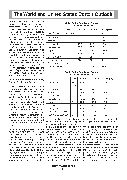
largest importer and at its second-high-China Cotton Supply and Demand
2018/19 and 2019/20 est.
Unit2018/192019/20Change (%)
Beg. StocksMil. bales38.035.7-6.1
Production
Imports"
"27.8
9.627.3
8.5-1.8
-11.8
Total supply
Consumption"
"75.4
39.571.4
37.5-5.3
-5.1
Exports
Total use"
"0.2
39.70.2
37.7-17.8
-5.1
Ending stocks
Reserve stocks"
"35.7
10.533.7
10.5-5.4
0.0
Stocks-to-use
% of world stks%
"89.8
44.689.6
41.1-0.2
-7.8
World Cotton Supply and Demand
2018/19 and 2019/20 est.
Unit2018/192019/20Change (%)
Beg. StocksMil.
bales80.882.1-1.0
Production"118.6121.32.3
Imports
Total supply"
"42.2
199.443.5
201.33.2
0.9
Consumption
Exports"
"120.2
41.3119.0
43.5-1.0
5.3
Total use
Ending stocks"
"120.3
80.0119.2
82.1-0.9
2.7
Stocks outside China
Stocks-to-consumption"
%44.3
66.648.4
69.09.2
3.6
est level in six years. Brazil has wit-
nessed greater exportable supplies
with stagnant domestic demand, es-
pecially due to the second crop
(safrina) season. Four of the world’s
top five exporters are expected to ex-
pand shipments from the previous year
amid higher crops in each respective
country. This more than offsets the low-
est Australia exports in eleven years
and declining shipments from Central
Asia, where domestic consumption
continues to replace exports. West
Africa’s Franc Zone exports are ex-
pected to marginally surpass the pre-
vious year’s record to reach 5.7 mil-
lion bales, with Benin, Mali, and Cote
NCM-MARCH 2020
25d’Ivoire as the top three exporters in
the region (in that respective order).
World ending stocks are projected at
a four-year high of 82.1 million bales,
despite lower beginning stocks and
China stocks declining almost 2 mil-
lion bales from the previous year.
Higher global production coupled with
lower consumption are the primary driv-
ers behind a higher stock-to-use ratio
as well. India is expected to witness
the largest increase, with stocks pro-
jected at 13.0 million bales, edging up
3.7 million from the previous year. The
United States and Brazil are also ex-
pected to increase stocks despite