                                Water and Oil Repellent Finishing of Textiles by UV Curing
oven [6], since it is carried out at low
temperature. Therefore, the functional-
ization of a cotton surface by UV-cured
coatings has been proposed to obtain
various finishing effects onto fabrics
such as color fastness in pigment print-
ing [7], antimicrobial activity [8], flame
retardancy [9,10], and finally water and
oil repellency [11,12].
Polysiloxanes are widely used for tex-
tile finishing to impart softness, crease
resistance, and water repellency. A typ-
ical molecular structure of silicone
polyether oligomer containing reactive
acrylic groups for thermal or UV cur-
ing is shown in Figure 3.
The application by UV grafting of poly-
hedral oligomeric silsesquioxanes
(POSSs) and polysilazane (KION 20)
to cotton fabrics to confer water repel-
lency has recently been reported [13].
This was clearly achieved by the treat-
ment with both silicon compounds
showing water contact angles higher
than 90 on the as prepared samples,
but with total loss of water repellency
after aging of those treated with POSS.
However, silicon compounds are un-
able to confer oil repellency, hence the
production and application of different
types of fluorochemicals for textile fin-
ishing has often been reported [14].
These consist of perfluorinated carbon
chains which impart, at the same time,
water and oil repellency to the fiber
surface when incorporated into a poly-
mer backbone with perfluoro groups as
side chains [15].
The currently used fluorochemicals are
based on C6 carbon chains, which
have replaced the C8 fluorocarbons
that can release perfluorooctane-
sulfonate (PFOS) and perfluorooctano-
ic acid (PFOA), higly hazardous and
toxic substances. In fact, in 2009
Huntsman launched Dupont™ (Dupont,
Wilmington, DE, USA) products under
the name Oleophobol® CP (Ole-
ophobol, Huntsman, Switzerland)
based on short chain molecules that
cannot break down into PFOA in the
environment and provide a step-change
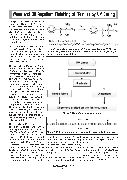
reduction in trace impurities below theFigure 1: UV grafting mechanism: (a) Photoinitiator (Darocur 1173) frag-
mentation; (b) H abstraction from cellulose backbone; (c) grafting of
acrylic oligomer on cellulose
Figure 2: UV grafting process on fabric
Figure 3: Molecular structure of diacrylated silicone polyether oligomer
limit of detection. However, C6-based
fluorocarbons show repellency rating
and washing durability much lower than
C8-based ones, hence cross-linkers,
such as maleic acid, were introduced
to enhance their performance and du-
rability [16].
A typical molecular structure of these
short-chain perfluorinated oligomers
NCM-APRIL 2020
68containing reactive acrylic groups for
thermal or UV curing is reported in Fig-
ure 4.
Fluorochemical finishings are commer-
cially available as water emulsions and
are applied to fabrics by the pad–dry–
cure method, with a thermal curing
o
step at 150–175 C in a hot flue for
some minutes [17–20]. As an alterna-