                                Water and Oil Repellent Finishing of Textiles by UV Curing
tive, the UV grafting of perfluoro-alkyl-
polyacrylate resins as Oleophobol CP-
C has been tested on cotton fabrics in
a previous laboratory work, where the
effectiveness of this approach has
been compared with that obtained by
thermal polymerization [2]. Yields af-
ter UV curing are quite similar, while
strong water and oil repellency con-
ferred by photografting was confirmed
by static and dynamic contact angle
measurements. The water repellency
was practically unaffected by repeat-
ed washings regardless of curing time
and finish add-on. Water vapor trans-
mission rates showed that both the
thermal and the UV curing finish treat-
ments do not reduce the breathability
of the original cotton. The laboratory
experiments were carried out on dried
samples of small surface by UV graft-
ing under nitrogen flux, using a low
power apparatus, as recommended to
maximize the yield of radical curing.
In conclusion, the laboratory scale
application of water and oil repellent
finishing on cotton fibers by UV graft-
ing of silicone or fluorocarbon-based
resins, with the optimization of pro-
cess parameters, followed by a deep
characterization of treated samples,
confirmed the effectiveness of the
treatment.
The aim of the present study has been
a semi-industrial scale-up of the pro-
cess. The scaling-up is one of the as-
pects of photografting that requires
more efforts to optimize the different
parameters affecting the final efficien-
cy of the process, such as the chem-
istry of the reagents, type and concen-
tration of the photoinitiator, and UV
dose and its delivery, especially in a
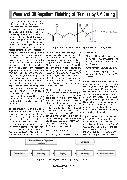
continuous roll-to-roll process. A greatFigure 4: Molecular structure of perfluoro-acrylic oligomers
number of fabric samples larger than
those used in laboratory experiments
has been padded with commercial fin-
ishing agents and then irradiated with
a high power, semi-industrial UV lamp.
The treatment has been performed in
air to avoid the inert gas consumption.
Finishing agent add-ons have been sig-
nificantly kept low in order to hold down
the finishing cost. White and dyed sam-
ples of different textile composition
have been treated and evaluated in
terms of conferred repellency, yellow-
ing, or color changes.
Most relevant process parameters
have been investigated, considering the
thermal process normally adopted at
the industrial level as reference. Re-
sults have been so statistically evalu-
ated to point out the most influencing
parameters and the real possibility to
replace at industrial scale the thermal
treatment with UV. The statistical treat-
ment was performed using Minitab 16
software and the results are reported
in Supplementary Materials, where Ta-
ble S1 gives the meaning of the Minit-
ab codes, while the Figures from S1 to
S10 show the statistical plots.
Materials and Methods
In this work, three different knitted fab-rics were used:
-“Punto Milano” (PM) dark grey
heavy fabric, 360 g/m2, composed
by 70% viscose, 25% nylon and
5% elastan;
-white pure cotton (COT), 210 g/m2;
-white light viscose (VIS), 130 g/m2,
composed by 94% viscose and 6%
elastan.
Oleophobol CP-S (Oleophobol, Hunts-
man, Switzerland) and Pymasil E-MC
(Pymasil, Pymag, Spain) were applied
as finishing agents. Both are commer-
cial products in form of aqueous emul-
sions stabilized with surfactants, with
about 20 wt % concentration of fluoro-
acrylic or silicone-acrylic oligomers, for
Oleophobol and Pymasil, respective-
ly. They are already applied at an in-
dustrial level by thermal process to
confer stain resistance (Oleophobol)
and soft hand (Pymasil).
A great number (180) of fabric sam-
ples (40 20 cm2 ) were padded with
Oleophobol or Pymasil solutions (50
g/L, 35 g/L, and 20 g/L for the first; 40
g/L, 25 g/L, and 10 g/L for the sec-
ond), while for UV curing 4 wt % of
Darocur 1173 (Ciba) finishing agent
was added as photoinitiator. The sam-
Figure 5: Flow diagram of the UV grafting process.
NCM-APRIL 2020
69