Pioneering Research at the Forefront of Health Innovation: Associate Professor Li Guo Unveils Transformative Smart Textile Systems for Home Rehabilitation
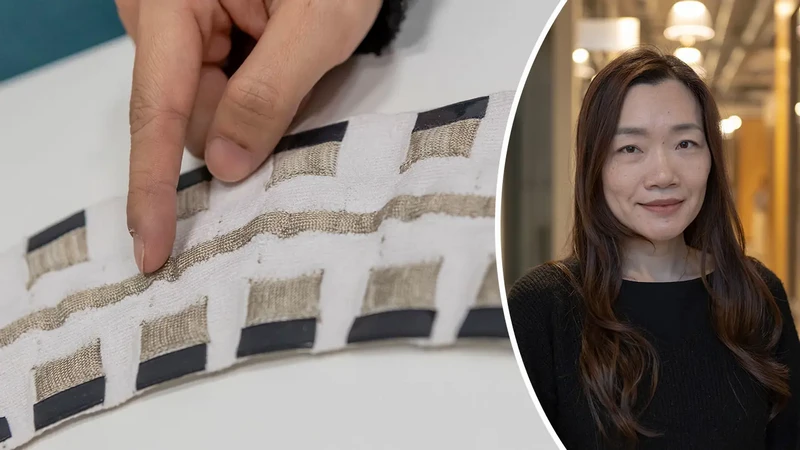
Borås, Sweden – A significant public lecture on August 27 will illuminate the groundbreaking work of Associate Professor Li Guo of Textile Technology at the Swedish School of Textiles, as she presents “Textile-Based Electrodes for sEMG: Towards Smart Textile Systems for Home Rehabilitation.” This insightful presentation promises to detail a visionary approach to healthcare, demonstrating how the intimate and ubiquitous nature of textiles can be harnessed to deliver accessible and personalized rehabilitation outside traditional clinical settings, marking a pivotal step towards the future of digital health.
The lecture, scheduled from 14:05 to 15:00 at Vestindien B, Textile Fashion Center, will trace Professor Guo’s journey from fundamental investigations into materials and structural design to the seamless integration of textile-based electrodes into advanced smart systems poised for real-world application. Attendees will gain a comprehensive understanding of her innovative research framework, which systematically progresses from the foundational aspects of material selection and fabric architecture – including how surface properties influence physiological signal acquisition – through functional component design, sophisticated system integration, and rigorous feasibility studies. Professor Guo will share compelling examples from her own projects, notably in stroke rehabilitation and the treatment of phantom limb pain, illustrating the tangible impact of her work on patients’ lives and the transformative potential of textile technology in healthcare. This session forms part of a dual lecture series, preceding a presentation by Associate Professor Junchun Yu on resource efficiency and recycling in textiles.
Professor Guo’s profound interest in this cutting-edge field stems from a lifelong attraction to the tactile and human dimensions of technology, famously encapsulated by the phrase, “Textiles are the technology of the everyday.” She eloquently describes textiles as “close to the body, part of daily life, but also technically fascinating,” recognizing their unique capacity to evolve into active interfaces capable of sensing, actuating, and communicating. Her current research is profoundly shaped by the vital question posed by architect Cedric Price, “Technology is the answer, but what was the question?”, which serves as a constant reminder to ground all innovations in real-world needs. Her immediate focus is on successfully transitioning smart textiles from the confines of the laboratory into the fabric of people’s everyday lives, ensuring these systems are not merely technically proficient but also inherently usable, reliable, and meaningful within diverse real-life contexts. Looking ahead, Professor Guo envisions deepening her research in material science to achieve fundamental technical breakthroughs, thereby enhancing system reliability and usability, while simultaneously expanding the application of smart textile solutions beyond home rehabilitation into other critical areas of healthcare.
The societal relevance of this research is immense, particularly given the escalating global challenge of chronic conditions and the increasing demand for long-term supportive care. With over 80 million people affected by stroke worldwide, and approximately 25,000 new cases annually in Sweden alone, the limitations of conventional rehabilitation services post-discharge are stark. Professor Guo’s work offers a compelling solution: textile-based systems that can provide continuous feedback or stimulation directly within the home environment. This extends the reach and intensity of rehabilitation beyond the confines of a clinic, offering a scalable, comfortable, and highly personalized approach that directly addresses the pressing need for sustainable, home-based care models.
A cornerstone of Professor Guo’s methodology is her unwavering commitment to multidisciplinary collaboration, particularly with healthcare professionals and patients. She asserts that “the most interesting insights come through collaboration,” highlighting how these diverse perspectives are instrumental in challenging assumptions and ensuring the technology remains truly relevant and user-centered. This co-design approach is not merely a research method for her; it is a fundamental philosophy that ensures the technology is deeply grounded in the real-life experiences and needs of those it aims to serve, thereby fostering more dynamic and rewarding research outcomes.
The recent Associate Professor qualification holds significant meaning for Professor Guo, representing not only a recognition of a hands-on and reflective research journey but also a pivotal moment to contemplate her future contributions. It serves as an encouragement to continue building vital bridges between disciplines and to mentor others in doing the same, shaping the direction and impact of textile technology in the broader landscape of digital health.
This lecture offers a unique opportunity for colleagues and doctoral students in textile technology and related fields, as well as anyone interested in healthcare innovation, wearable systems, or user-centred design, to engage with pioneering research. Professor Guo’s presentation is set to illustrate how rigorous, application-oriented research in engineering and materials science is not only shaping future healthcare but is also delivering practical, user-centered solutions with profound societal relevance.