Weaving New Threads: India’s Silk Diplomacy in Vietnam
A delegation from India’s Central Silk Board explores ancient traditions and modern partnerships in a five-day journey through Vietnam’s textile heartland
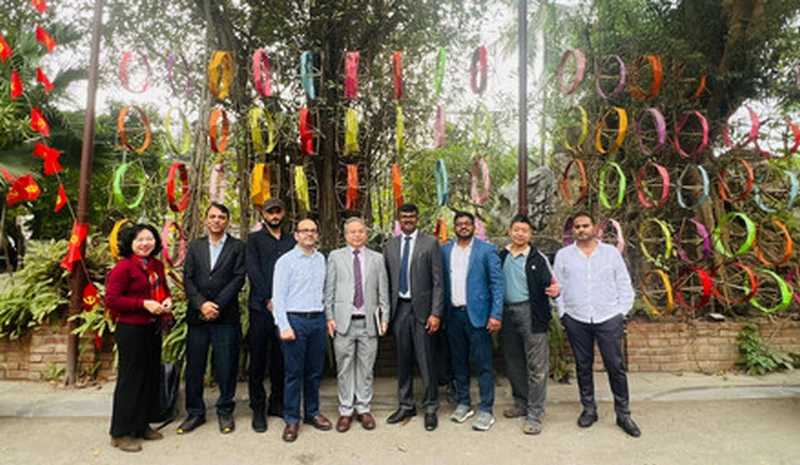
In the bustling corridors of Hanoi’s Embassy of India, where the tricolor meets the red star, a quiet revolution in textile diplomacy unfolded this February. A delegation from India’s Central Silk Board—carrying with them the weight of a 75-year legacy and the sheen of Indian silk—embarked on a mission to bridge two ancient weaving civilizations.
The historic entrance to Van Phuc Silk Village, where centuries of Vietnamese weaving tradition await
The journey began with a gesture as delicate as the fabric itself. Dr. Naresh Babu N., Joint Secretary (Technical) at the Central Silk Board, presented a Five-in-One Silk Stole to the Chairman of Bitexco Nam Long Joint Stock Company—one of Vietnam’s textile titans. This wasn’t merely ceremonial; it was an invitation. With the stole came a formal request to participate in Bharat Tex 2026, India’s premier textile exhibition that has rapidly become the global stage for fabric innovation.
Bharat Tex has emerged as India’s largest textile showcase, drawing international participants
But the delegation’s ambitions stretched beyond boardrooms. They carried invitations not just to corporations, but to communities. The Vietnam Textile and Apparel Association (VITAS) received a warm invitation to Bharat Tex 2026, while the Vietnam Association of Craft Villages (VICRAFTS) opened discussions on something more intimate—the preservation of handloom heritage, village-level production strategies, and the policies that keep ancient crafts alive in a modern economy. The Vietnamese artisans’ eyes lit up at the prospect; their interest was not polite, but keen.
At the Embassy of India in Hanoi, Ambassador Shri Tshering Wangchuk Sherpa welcomed the delegation for discussions that wove together diplomacy and thread counts. Here, in rooms where geopolitics usually dominates, the conversation centered on mulberry cultivation, reeling techniques, and the shared challenge of keeping traditional crafts relevant in an age of fast fashion.
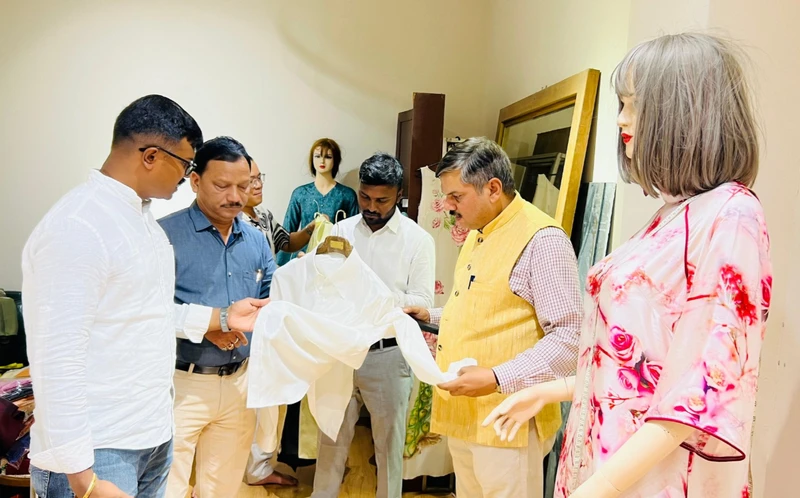
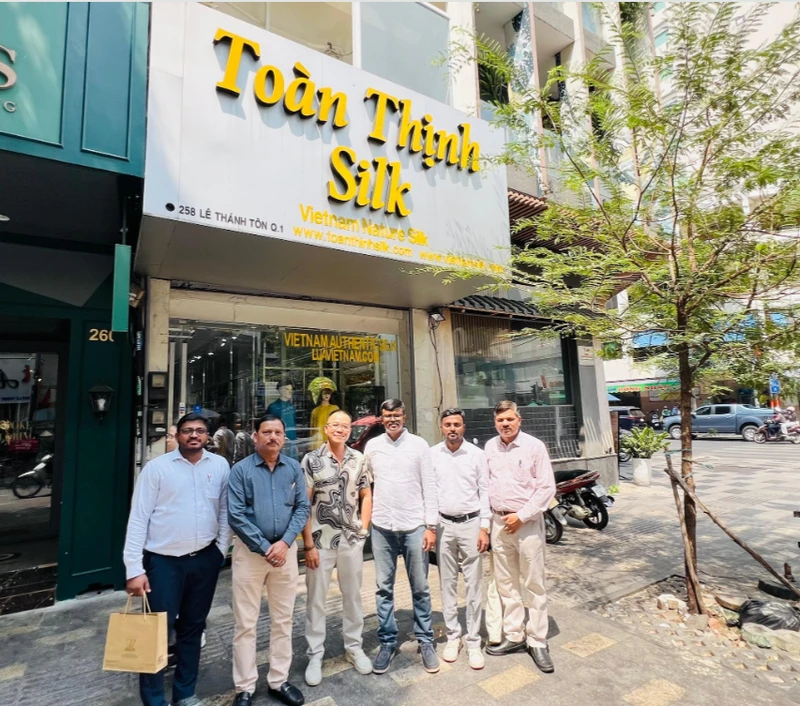
Indian delegates visited traditional Vietnamese silk shops in Ho Chi Minh City, exploring a wide range of silk fabrics & heritage fashion products. The delegation also visited a silk tailoring unit and interacted with artisans to understand stitching techniques and innovative designs, opening avenues for product diversification and India-Vietnam collaboration.
The delegation then traveled to Van Phuc Silk Craft Village, a living museum where the looms have hummed for more than a millennium. Walking through narrow lanes where silk hangs like rainbow waterfalls, the Indians watched Vietnamese weavers at their looms, fingers dancing across warp and weft with the muscle memory of generations. They observed an integrated ecosystem that India is eager to learn from—how Van Phuc seamlessly connects weaving to embroidery, design to fashion, heritage to market access.
The insights were immediate and practical. The delegation saw in Van Phuc a model for India’s own sericulture-tourism initiatives, where visitors don’t just buy silk—they watch it being born, meet the hands that craft it, and carry home stories woven into every fiber.
The modern side of Vietnam’s textile story revealed itself in automatic reeling units—where technology meets tradition—and sprawling mulberry farms that feed the industry’s hunger for raw material. At the Vietnam International Value Chain Exhibition 2026 (VIVC 2026) and the Vietnam Glorious Spring Fair 2026 (VGSF 2026), the Central Silk Board’s stall became a magnet for visitors. Indian silk products, displayed against the backdrop of one of Asia’s fastest-growing economies, drew crowds that signaled something clear: the world is ready for Indian silk, and Vietnam could be the gateway.
In Ho Chi Minh City, the delegation’s final stop, traditional silk outlets revealed the diversity of Vietnamese fabric heritage. Local artisans demonstrated stitching techniques that have evolved over centuries, while contemporary designers showed how those techniques adapt to modern fashion. The Indians examined heritage fashion products with the eye of students and the vision of collaborators—seeing not just what is, but what could be when Indian and Vietnamese aesthetics intertwine.
The Central Silk Board celebrates 75 years of revolutionizing India’s silk industry
As the five-day visit concluded, the threads of connection had multiplied. Joint research and development initiatives now hang in the balance, waiting to be formalized. Technology transfer agreements are being drafted. Business-to-business partnerships have been seeded. Most importantly, global market linkages—long the dream of Indian silk producers—now seem within reach, with Vietnam positioned as both partner and portal.
For the Central Silk Board, this visit represented more than diplomatic duty. Under the Ministry of Textiles’ vision of expanding international collaboration and strengthening value chains, the delegation proved that silk—this ancient, lustrous thread—can still bind nations together. In an era of synthetic fabrics and digital commerce, there remains something powerfully human about two cultures meeting through the shared language of looms, dye vats, and the patient art of turning cocoon into cloth.
The looms of Van Phuc and Mysuru may soon be speaking the same language. And Bharat Tex 2026 will likely hear Vietnamese voices joining the chorus of global textile diplomacy.
This initiative aligns with the Government of India’s Azadi Ka Amrit Mahotsav celebrations, marking 75 years of independence through strengthened international partnerships in traditional industries.

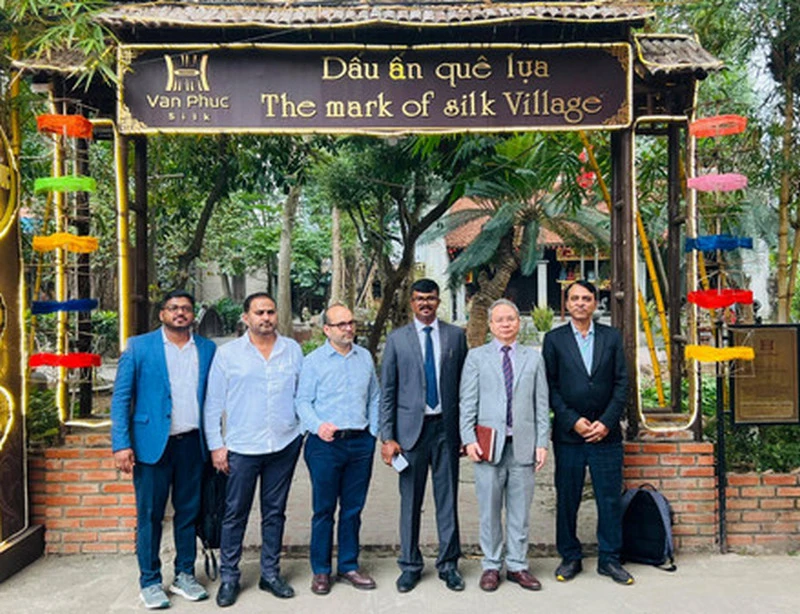 The historic entrance to Van Phuc Silk Village, where centuries of Vietnamese weaving tradition await
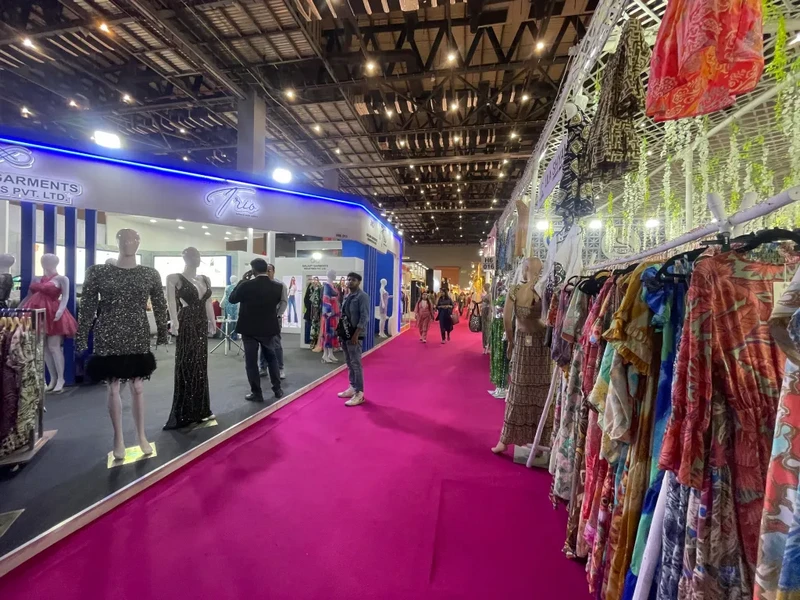 Bharat Tex has emerged as India’s largest textile showcase, drawing international participants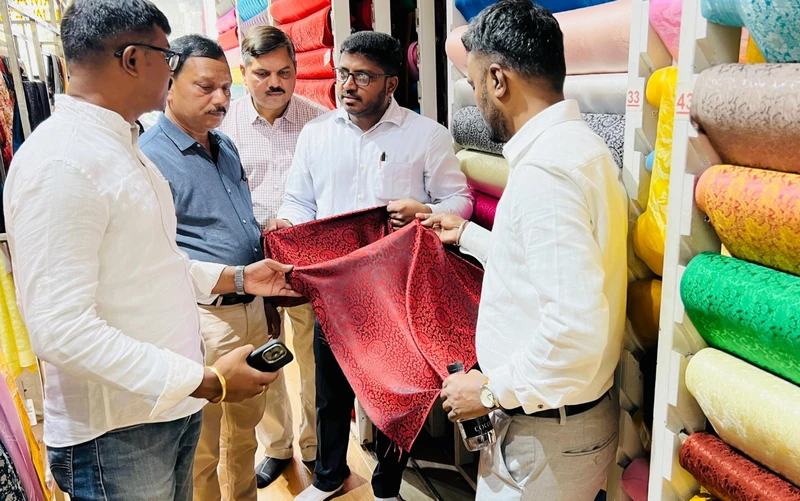
 The Central Silk Board celebrates 75 years of revolutionizing India’s silk industry
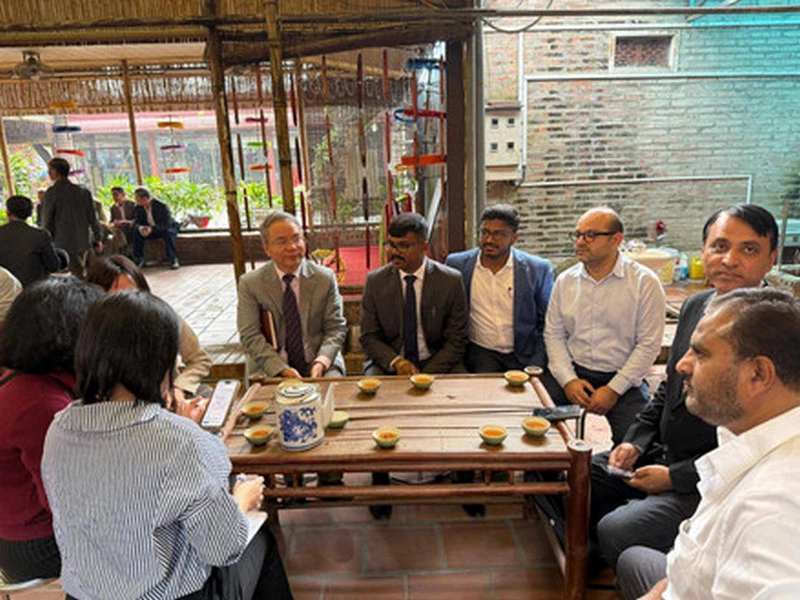 The looms of Van Phuc and Mysuru may soon be speaking the same language. And Bharat Tex 2026 will likely hear Vietnamese voices joining the chorus of global textile diplomacy.