Indian Exporters Are Expanding Production in Africa to Avoid US Tariff
Indian businesses are looking to expand production in Africa for exporting to the US, after President Donald Trump hit the South Asian nation with one of the steepest levies globally as punishment for purchases of Russian oil. GAP supplier Gokaldas Exports and premium garments maker Raymond Lifestyle are among the companies planning to leverage tariffs of as low as 10% in some African countries, compared to the 50% levy on Indian exports. Diamond and jewelry exporters are also looking into expanding on the continent.
Indian companies are racing to Africa to counter the impact of steep new U.S. tariffs, which recently imposed a 50% duty on certain Indian goods. This significant tariff hike is a major challenge for Indian businesses, as absorbing such a cost is nearly impossible without passing it on to consumers, which could drastically reduce demand. As a result, exporters are seeking alternative markets where they can produce goods affordably and maintain competitive pricing in the U.S. market without sacrificing profit margins. Africa has emerged as a promising destination, offering favorable trade conditions with tariffs as low as 10%, making it an attractive hub for Indian firms.
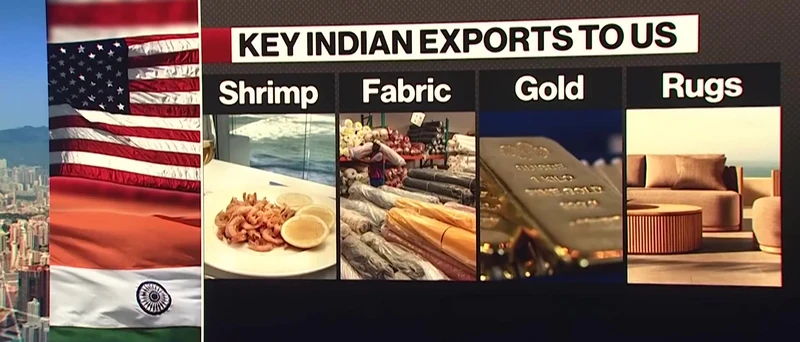
The U.S. is a critical export market for India, with $20 billion in exports of textiles, jewelry, and diamonds in 2023. However, the new tariffs threaten to slash demand for these goods by up to 90% in some cases. To address this, Indian companies are exploring production opportunities in African countries like Kenya, Ethiopia, and Botswana. Apparel companies, for instance, are expanding operations in Kenya and Ethiopia, while those in the gem and diamond trade are focusing on Botswana. These countries provide a conducive environment with supportive policies, tax incentives, and affordable labor, creating an appealing landscape for investment.
Despite these opportunities, Indian companies face challenges in Africa. They must renegotiate business terms and navigate varying perceptions of risk, particularly in countries like Ethiopia, where concerns about potential conflict could complicate operations. Nevertheless, the growing trade relationship between India and Africa provides a strong foundation for expansion. At a recent India-Africa trade conference, it was noted that bilateral trade has surpassed $100 billion, nearly doubling since the COVID period and growing by 78% over the past five years. India is also increasing its financial engagement, providing $12 billion in concessional loans and $700 million in grants to African nations.
To compete with global powers like the U.S., UK, EU, and China, India is working to establish a stronger presence on the continent. While China has made significant inroads through its Belt and Road Initiative and the U.S. through minerals and security deals, India is striving to carve out its own space. To fully solidify its position in Africa, India will need to leverage its growing economic ties and strategic investments to make a lasting impact.