With regard to the export of cotton, the country has witnessed a very strange and tricky situation this year making the government’s decision irrelevant and unacceptable to the stakeholders – cotton producers, ginners, cotton traders and the consuming industries like spinning mills, yarn traders, power looms, composite mills and of course exporters and importers of these materials including raw cotton. The government and others involved in policy making got sandwiched between two groups whose vested interests had been diagonally opposite irrespective of the fact whether the export was allowed or banned. I feel that this makes a very interesting as well as important case study for our premier institutes of management. Their in-depth study of various aspects of this complex situation can help the government to strike a balance between various stake holders and ensure that the farmers get their fair and assured returns and unscrupulous hoarders get punished. The consuming mills should also not blow up their price concerns just to make more profits or cover up their inefficiency. The middlemen also need to be monitored so that they are not able to exploit the farmers who lack business acumen to deal with the buyers of their produce.
There is a growing feeling among the farmers’ bodies that farmers should have the freedom to market their produce wherever there is demand within and outside the country and the entire country should be treated as a single market. This sounds quite logical in the current era of globalization. The ban on cotton exports to protect the powerful textile lobby only helps the textile mill owners who want cheap raw material to increase their profit margins. In view of good demand for cotton in the global markets if farmers want to export their produce to earn some money then it is should not pinch anybody. In any case there is no control on the prices of cloth and garments being sold in the country. Let there be an in-depth study and everybody know the cost structure of cotton farmers and mills.
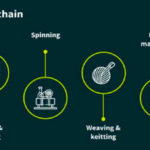
Let each stake holder’s business model be studied to bring out the real facts.The export restrictions have been responsible for the misery of cotton growers in all the major cotton producing States who were denied attractive prices to their produce and export in the international market for fetching handsome remunerative prices. The ban is believed to be not only anti-farmers but also against the WTO norms and also undermines the spirit of free economy. The organized sector mills’ associations say that the mills are facing the “worst ever crisis during the past several decades” and therefore the export of cotton should be banned to provide relief to them. The different stakeholders have different demands and also vested interests but the government must see that no one takes undue advantage of the government policies which must be formulated considering the farmers’ realization on top of everything else. Let every stake holder accept this basic point. If everyone, except the farmer, is making money in the value chain then it is going to be shame for the government as well as the civil society. I feel that the government should seek help from various IIMs in policy making and monitoring.

 With regard to the export of cotton, the country has witnessed a very strange and tricky situation this year making the government’s decision irrelevant and unacceptable to the stakeholders – cotton producers, ginners, cotton traders and the consuming industries like spinning mills, yarn traders, power looms, composite mills and of course exporters and importers of these materials including raw cotton. The government and others involved in policy making got sandwiched between two groups whose vested interests had been diagonally opposite irrespective of the fact whether the export was allowed or banned. I feel that this makes a very interesting as well as important case study for our premier institutes of management. Their in-depth study of various aspects of this complex situation can help the government to strike a balance between various stake holders and ensure that the farmers get their fair and assured returns and unscrupulous hoarders get punished. The consuming mills should also not blow up their price concerns just to make more profits or cover up their inefficiency. The middlemen also need to be monitored so that they are not able to exploit the farmers who lack business acumen to deal with the buyers of their produce.