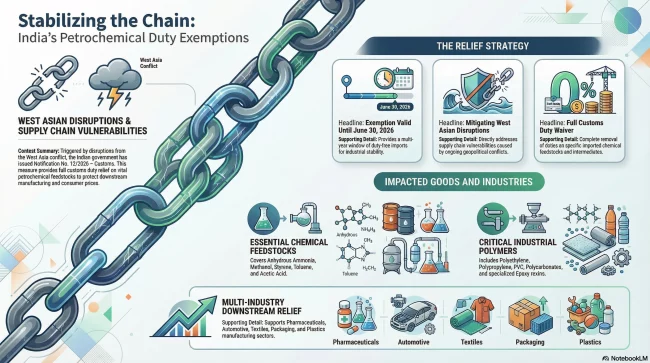
To combat supply chain volatility caused by geopolitical conflict, the Indian government has completely eliminated import taxes on numerous vital petrochemicals. This strategic tax relief, which remains active until mid-2026, targets essential materials like polymers, resins, and specialized chemicals used in diverse manufacturing sectors. By lowering the cost of these raw materials, officials aim to support industries ranging from pharmaceuticals to automotive production while shielding consumers from price spikes. The initiative serves as a protective measure to ensure domestic economic stability and industrial competitiveness during global uncertainty. Ultimately, the policy reflects a proactive effort to maintain the consistent availability of finished goods across the nation.
In response to the ongoing conflict in West Asia and the resulting disruptions to global supply chains, the Government of India has announced a timely and targeted relief measure by granting full exemption from customs duty on a range of critical petrochemical products. This exemption, effective until June 30, 2026, aims to ensure the uninterrupted availability of essential inputs for domestic industries, ease cost pressures on downstream manufacturing, and maintain overall supply stability across key sectors.
By removing these duties temporarily, the initiative is expected to provide significant support to a broad spectrum of industries that rely heavily on petrochemical feedstocks and intermediates. These include plastics, packaging, textiles, pharmaceuticals, chemicals, automotive components, and various other manufacturing segments. The benefits are anticipated to cascade further, ultimately offering relief to consumers through more stable prices and sustained availability of finished goods.
The exempted items encompass vital substances such as anhydrous ammonia, toluene, styrene, methanol, monoethylene glycol, phenol, acetic acid, purified terephthalic acid, along with a comprehensive list of polymers including polyethylene, polypropylene, polystyrene, polyvinyl chloride, polycarbonates, and specialized resins like epoxy and polyurethanes. This carefully curated list addresses immediate vulnerabilities in the supply chain while underscoring the government’s proactive approach to safeguarding industrial resilience amid geopolitical uncertainties.
Overall, the move reflects a balanced strategy that prioritizes economic continuity and competitiveness without compromising long-term policy objectives. Detailed specifications of the exempted products, along with the official customs notification (No. 12/2026 – Customs), are available through the Ministry of Finance for reference and compliance.
Strategic Customs Exemptions for Essential Petrochemicals
S.No.
CTH
Description of goods
2814 10 00
Anhydrous ammonia
2902 30 00
Toluene
2902 50 00
Styrene
2903 12 00
Dichloromethane (methylene chloride)
2903 21 00
Vinyl chloride monomer
2905 11 00
Methanol (methyl alcohol)
2905 12 20
Isopropyl alcohol
2905 31 00
Monoethylene Glycol (MEG)
2907 11 10
Phenol
2915 21 00
Acetic acid
2915 32 00
Vinyl acetate monomer
2917 36 00
Purified Terephthalic Acid (PTA)
2921 21 00
Ethylenediamine
2922 11 10, 2922 11 90, 2922 12 00
Di Ethanolamine and Mono Ethanolamine
2929 10 20
Toluene di-isocyanate
3102 30 00
Ammonium nitrate
3817 00 11
Linear alkylbenzenes
3901
Polymers of ethylene (including Ethylene-vinyl acetate)