National Seminar on New Age Fibres held in New Delhi
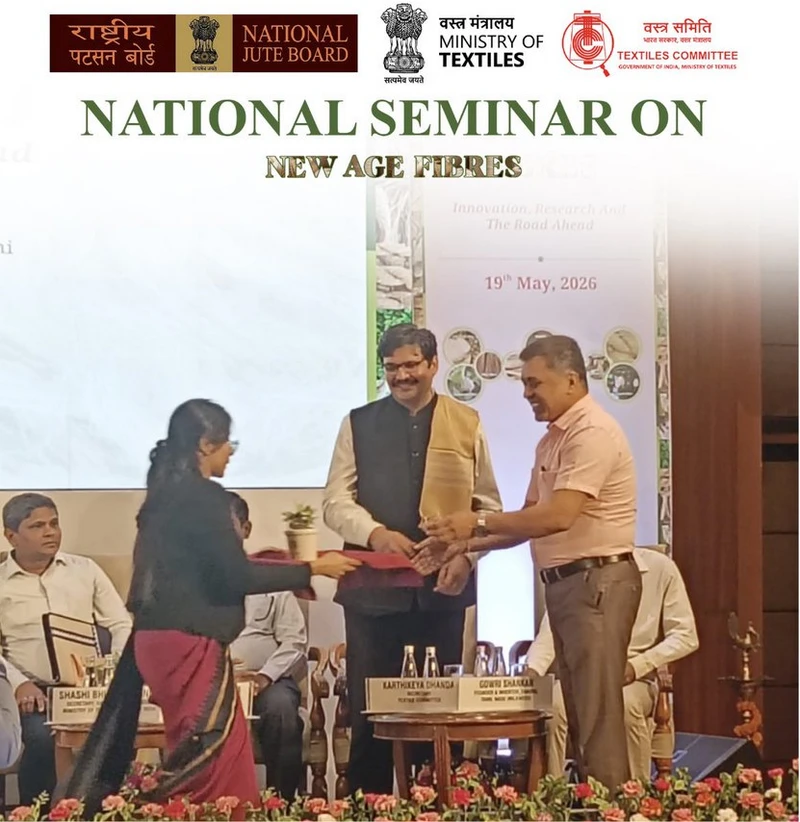
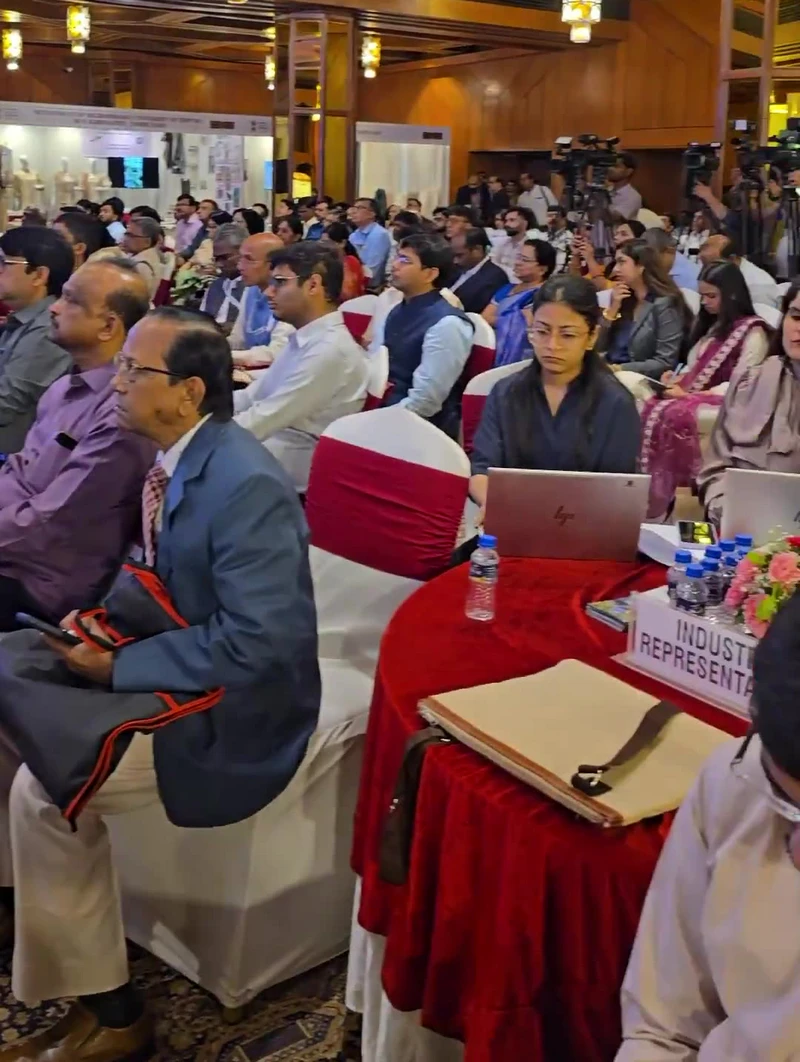
Union Minister of Textiles Shri Giriraj Singh inaugurated the National Seminar on “New Age Fibres – Innovation, Research and the Road Ahead” in New Delhi on May 19, 2026. Organized by the Ministry of Textiles through the National Jute Board, the event convened policymakers, industry leaders, researchers, innovators, startups, and academia to explore the transformative role of sustainable fibres in India’s textile sector. The gathering underscored the government’s commitment to sustainability, innovation, and self-reliance, with the presence of Minister of State for Textiles Shri Pabitra Margherita, Secretary of the Ministry of Textiles Smt. Neelam Shami Rao, and other senior officials.
In his address, Shri Giriraj Singh emphasized that new-age fibres are vital for advancing Atmanirbhar Bharat while supporting India’s sustainable development goals. He highlighted their potential to reduce environmental impact, create employment, and diversify agriculture, announcing that regular virtual meetings with stakeholders would ensure ongoing collaboration, progress monitoring, and accelerated ecosystem development. Shri Pabitra Margherita stressed the importance of innovation, skill development, and grassroots entrepreneurship, while Smt. Neelam Shami Rao called for converting seminar insights into concrete policy actions.
The seminar spotlighted promising natural fibres including pineapple, flax, milkweed, bamboo, hemp, nettle, banana, ramie, and kapok. These materials stand out for their eco-friendly, biodegradable, and versatile properties, offering opportunities for rural livelihood generation, value-added manufacturing, and stronger presence in both domestic and global markets. India’s varied agro-climatic conditions position the country well to scale production of these fibres, enhancing farmers’ incomes and promoting circular economy principles in textiles.
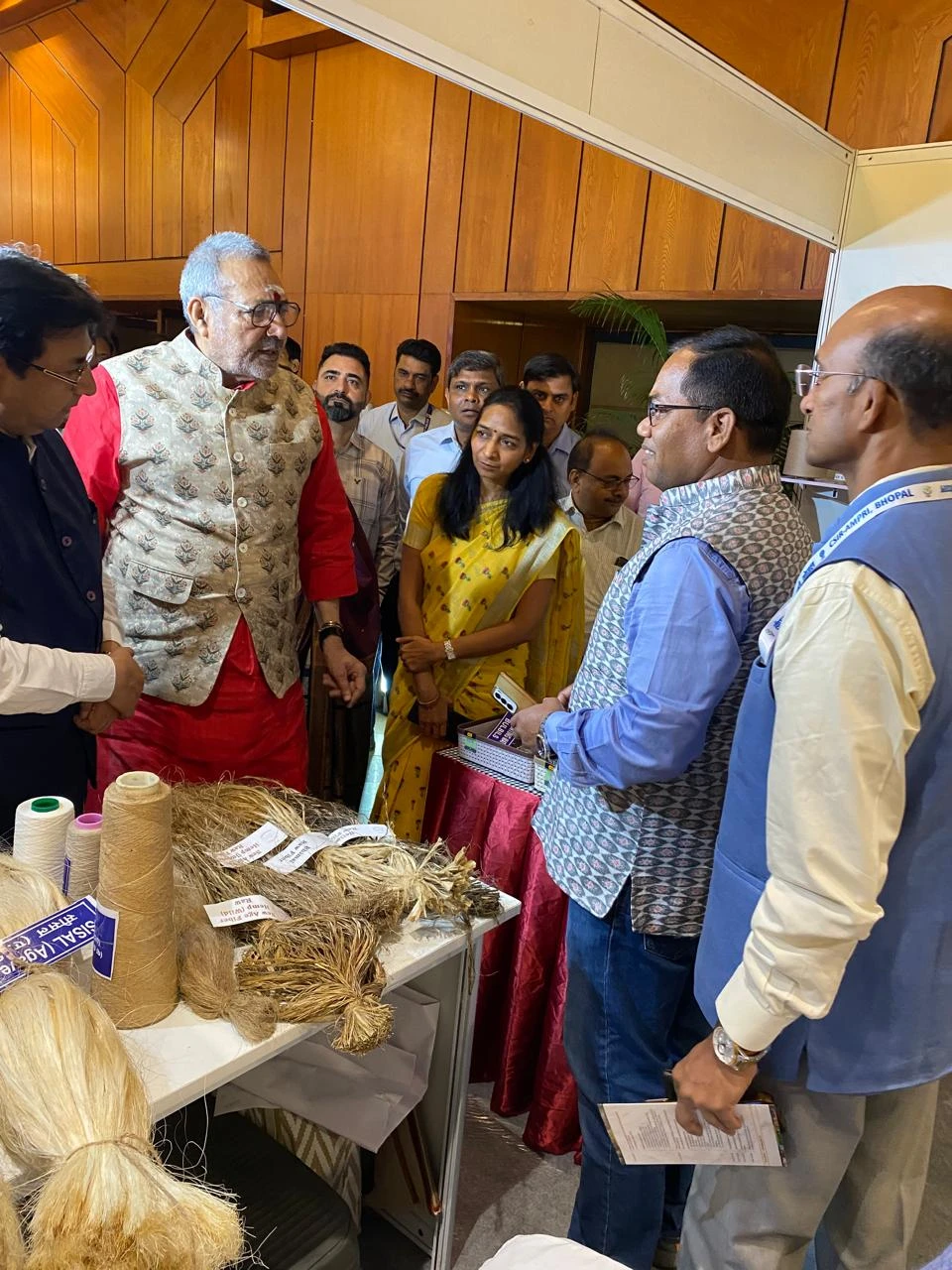
The programme began with the inauguration of the New Age Fibres Expo, where the Minister toured stalls displaying innovative products and technologies derived from natural fibres. A ceremonial lamp lighting marked the formal start, and Secretary of the National Jute Board Shri Shashi Bhushan Singh welcomed participants by outlining the fibres’ role in sustainability and global competitiveness. Key highlights included the launch of a dedicated New Age Fibres booklet and detailed reports from three Task Forces, which will provide a roadmap for sector development. Joint Secretary (Fibre) Mrs. Padmini Singla delivered a keynote addressing the domestic and international landscape, noting the global surge in demand for biodegradable textiles.
Dr. Thallada Bhaskar, Director, CSIR-Advanced Materials and Processes Research Institute (CSIR-AMPRI) also participated.
Thematic sessions delved into critical aspects. The first, on building a foundational framework, featured presentations from Task Forces covering specific fibre categories such as flax, milkweed, and hemp; bamboo, ramie, and sisal; and banana, pineapple, and kapok. Discussions addressed resource availability, cultivation techniques, extraction technologies, supply chain challenges, and the need for better institutional coordination, policy support, standardization, and capacity building. A subsequent session on entrepreneurial models showcased real-world successes in commercializing these fibres, with industry leaders sharing insights on applications in textiles, composites, and specialty products, while emphasizing startups, market linkages, branding, and investment needs.
Technical and commercial barriers were tackled in another session, focusing on improving extraction and processing machinery, ensuring quality consistency, strengthening research and development, and developing efficient supply chains through cluster-based approaches and inter-sectoral collaboration between agriculture and textiles. The concluding session outlined a 2030 roadmap, advocating enhanced policy support, inter-ministerial coordination, infrastructure for value addition, standards and certifications for exports, and alignment with international sustainability norms to establish India as a global leader in eco-friendly textiles.
The seminar’s outcomes are set to inform a comprehensive policy framework for new-age fibres. This initiative aligns with broader government efforts to promote sustainable materials, reduce reliance on synthetic fibres, boost rural economies, and strengthen India’s position in the global green economy. By fostering innovation and collaboration across stakeholders, these efforts will contribute meaningfully to environmental goals, employment generation, and the vision of a self-reliant and sustainable textile industry.

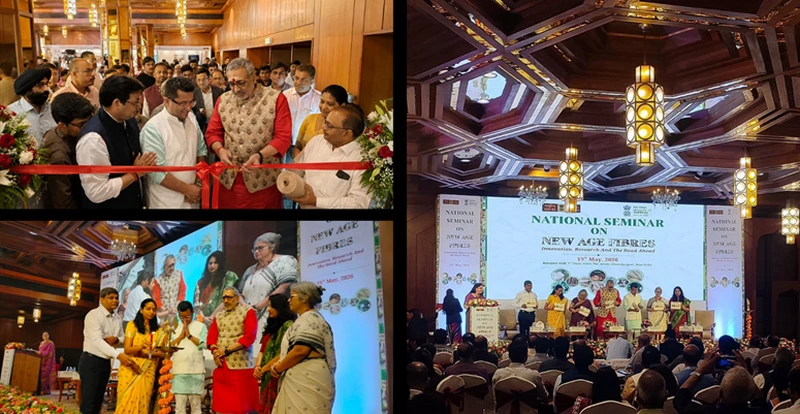
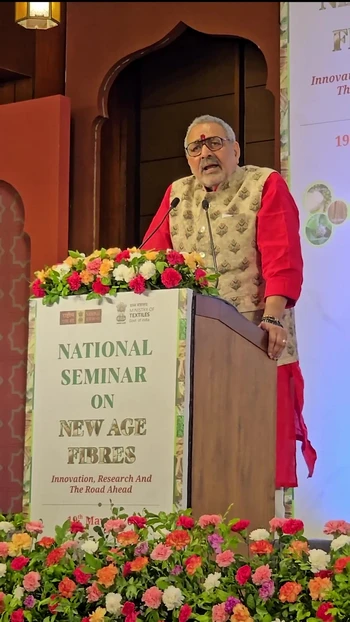 In his address, Shri Giriraj Singh emphasized that new-age fibres are vital for advancing Atmanirbhar Bharat while supporting India’s sustainable development goals. He highlighted their potential to reduce environmental impact, create employment, and diversify agriculture, announcing that regular virtual meetings with stakeholders would ensure ongoing collaboration, progress monitoring, and accelerated ecosystem development. Shri Pabitra Margherita stressed the importance of innovation, skill development, and grassroots entrepreneurship, while Smt. Neelam Shami Rao called for converting seminar insights into concrete policy actions.