Shein–Everlane Deal: A Defining Moment for Future of Fashion
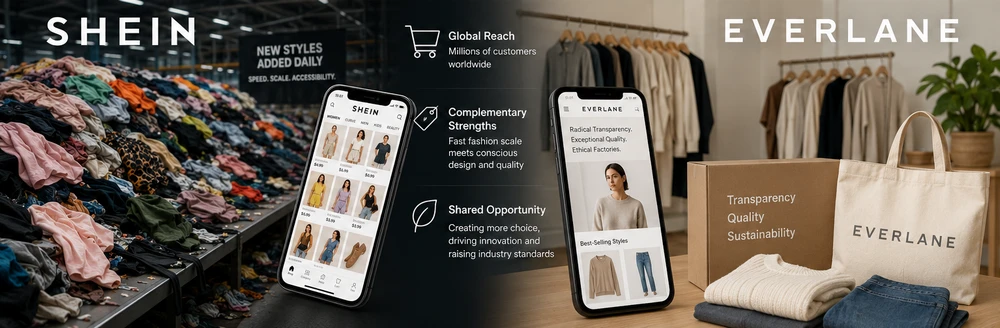
The global fashion industry is witnessing what could become one of the most debated acquisitions of the decade. Reports indicate that ultra-fast fashion giant Shein is set to acquire American apparel brand Everlane in a deal valued at approximately US$100 million. While neither company has publicly confirmed the transaction in full detail, multiple media reports suggest that the agreement has been finalized between Shein and Everlane’s majority owner, L Catterton. If completed as reported, the acquisition would represent far more than a conventional corporate takeover—it would symbolize a dramatic convergence between two fundamentally different visions of fashion.
Founded in 2011, Everlane emerged as one of the defining direct-to-consumer fashion success stories of the 2010s. Built around the philosophy of “radical transparency,” the brand sought to distinguish itself from traditional and fast-fashion retailers by openly disclosing factory information, production costs, and sourcing practices. Its minimalist aesthetic, premium basics, and sustainability-driven narrative resonated strongly with millennial consumers seeking ethical alternatives to mass-market apparel. At its peak, Everlane was widely viewed as a model for modern responsible retail and reportedly reached valuations approaching US$600 million.
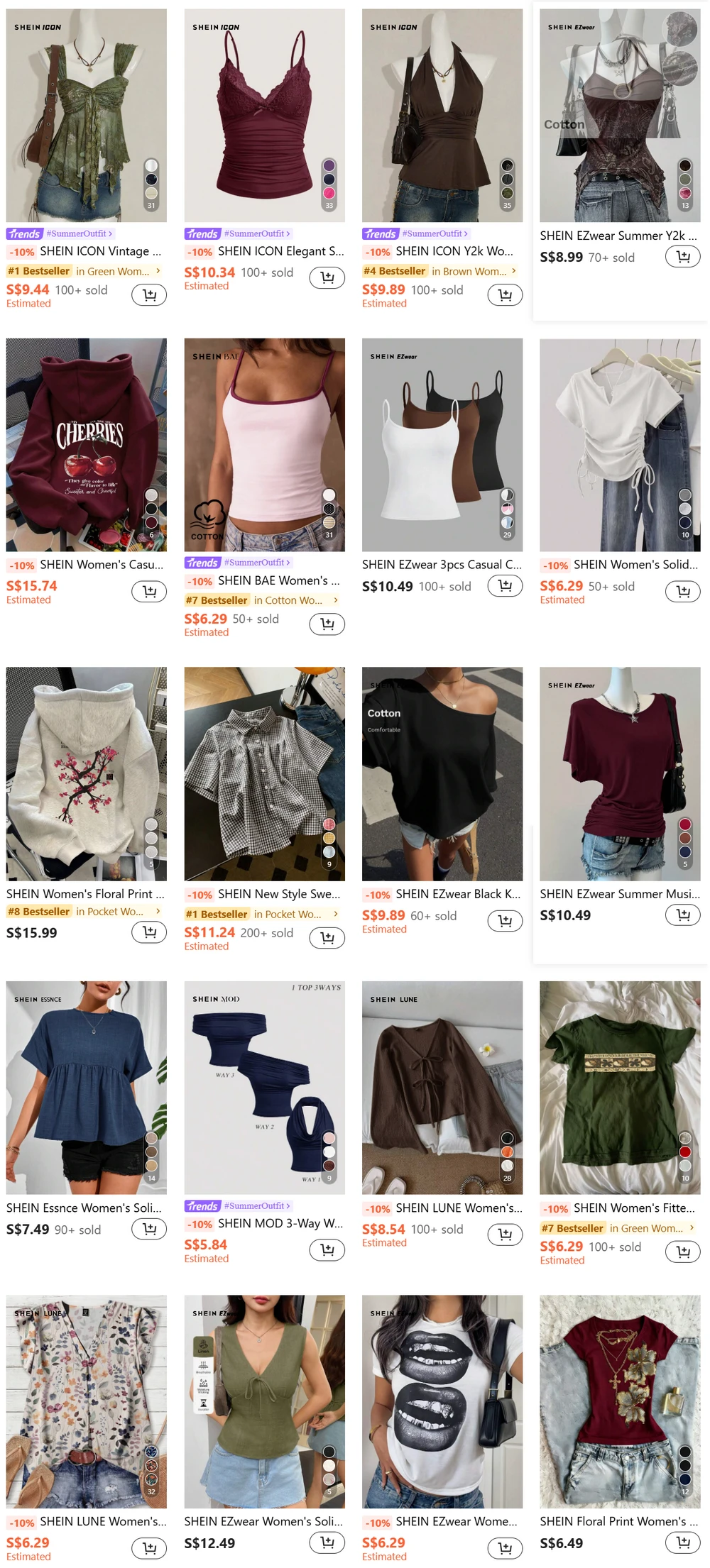
In stark contrast stands Shein, the Singapore-headquartered fast-fashion powerhouse whose manufacturing and merchandising model has transformed global apparel retail. Shein built its success on ultra-low pricing, data-driven trend detection, and rapid design-to-market cycles capable of introducing thousands of new styles in remarkably short timeframes. The company commands enormous global reach and has reshaped online fashion consumption, particularly among younger consumers. Yet its rise has also been accompanied by persistent criticism over sustainability concerns, labor practices, environmental impact, and intellectual property disputes. These criticisms have made Shein one of the most scrutinized names in global fashion.
Against this backdrop, the reported acquisition of Everlane has generated immediate debate and strong reactions across the retail and sustainability communities. Many observers view the pairing as deeply paradoxical: a company synonymous with ethical positioning and supply-chain transparency joining forces with a retailer frequently criticized as the embodiment of ultra-fast fashion. The transaction therefore raises profound questions about the commercial realities of sustainable fashion and the increasingly difficult economics facing mission-led apparel brands.
According to reports, the deal values Everlane at roughly US$100 million, a fraction of its earlier valuation and reflective of years of operational and financial pressure. Sources indicate that Everlane had been carrying approximately US$90 million in debt while simultaneously navigating a retail environment marked by slowing e-commerce growth, rising customer acquisition costs, inflationary pressures, and shifting consumer purchasing behavior. The brand reportedly struggled to regain momentum following the pandemic-era e-commerce surge and faced intensifying competition from both traditional retailers and lower-priced digital-first challengers.
Everlane Products
Industry analysts note that Everlane’s trajectory mirrors a broader challenge confronting many direct-to-consumer pioneers born during the digital retail boom. Brands that once thrived by bypassing wholesale channels and leveraging inexpensive digital marketing have increasingly found those advantages eroding. Higher advertising costs, saturated online marketplaces, and changing consumer expectations have placed pressure on profitability. Several once-celebrated consumer brands have faced restructuring, strategic pivots, or asset sales, illustrating how dramatically the retail landscape has evolved over the past decade.
For Shein, the reported acquisition appears strategically aligned with a broader effort to diversify beyond pure ultra-fast fashion and strengthen its positioning in Western markets. Analysts suggest the move could provide Shein with access to a more affluent consumer demographic, a respected design identity, and an established premium basics category without the time and expense required to build such capabilities organically. Everlane’s customer base, brand recognition, and sustainability narrative may also offer Shein additional credibility at a time when regulatory and reputational pressures are intensifying globally.
The timing is particularly notable. Shein’s operating environment has become more complex due to shifting trade policies and mounting scrutiny of cross-border e-commerce models. Changes affecting duty-free import mechanisms and heightened political attention toward Chinese-linked online retail platforms have created new challenges for companies dependent on low-cost international logistics. In this environment, expanding into higher-value brands and diversified revenue streams may represent a strategic hedge against future disruption.
Screenshot of Products for Sale on Shein Website
Yet perhaps the most compelling aspect of the reported acquisition lies not in the financial transaction itself, but in what it reveals about the evolving relationship between consumer values and purchasing behavior. Everlane’s rise was fueled by the belief that transparency, responsible sourcing, and sustainability could form the foundation of a commercially durable fashion business. Its reported sale to Shein has therefore become, for many observers, a symbolic moment—evidence of how difficult it has become for values-driven brands to compete against the scale, speed, and pricing power of global fast-fashion ecosystems.
Critics fear the acquisition could amount to little more than reputational arbitrage or “greenwashing,” allowing Shein to borrow credibility from Everlane’s ethical image while leaving broader business practices unchanged. Others argue that such assessments may be premature. Some industry voices contend that integration with a supply-chain giant could potentially allow sustainability-oriented practices to scale more effectively, provided Everlane maintains meaningful operational independence and continues pursuing its environmental and transparency commitments. Whether such coexistence proves feasible remains uncertain and will likely become one of the most closely watched questions in apparel retail.
The acquisition also underscores a larger transformation underway across global fashion. Increasingly, the market is rewarding affordability, convenience, and speed over aspirational ethical narratives. While consumer awareness regarding sustainability has undeniably grown, purchasing decisions continue to be heavily influenced by price sensitivity and economic conditions. This tension between ideals and affordability has become a defining feature of contemporary retail and may explain why even brands built on strong values propositions struggle to sustain long-term growth without achieving substantial scale or differentiated economics.
For the fashion industry, the Shein–Everlane story may ultimately be remembered as more than a merger headline. It may come to represent a broader reckoning for the sustainability movement itself. The transaction forces difficult but necessary questions: Can ethical fashion survive within a marketplace dominated by speed and price? Is sustainability most effective as a brand identity, or must it be embedded through regulation, industry-wide standards, and systemic reform? And perhaps most importantly, can two companies with such contrasting philosophies create a future that satisfies both commercial imperatives and growing expectations for responsible production?
Until formal announcements provide greater clarity, many details remain subject to confirmation. Nonetheless, the reported deal has already succeeded in igniting a global conversation—one that extends far beyond corporate ownership and into the very future of fashion.