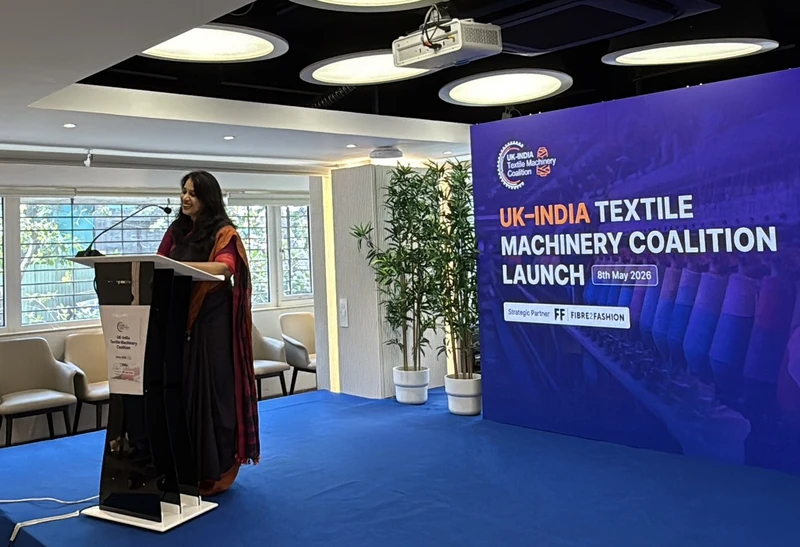
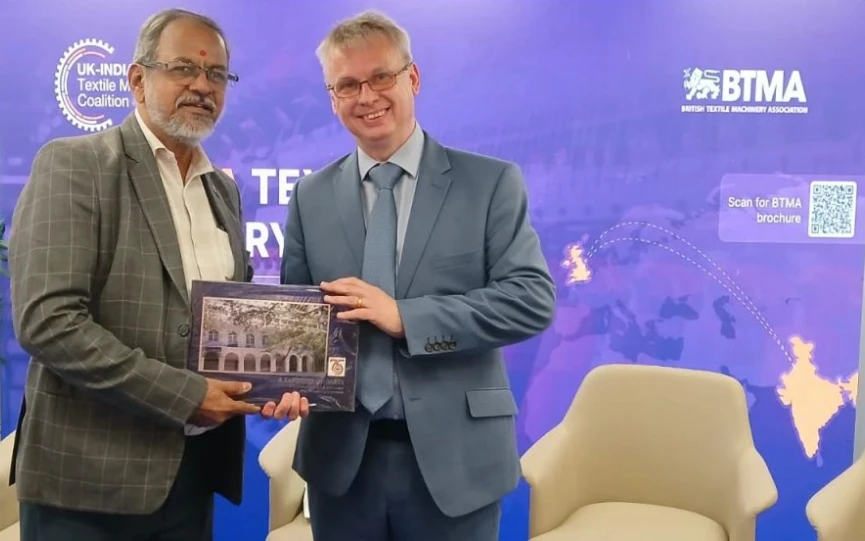
Chief Guest Smt. Vrunda Manohar Desai, Textile Commissioner of India
Mr Jason Kent, CEO, BTMA
India represents one of the most important strategic markets for the global textile industry, and the purpose of this Coalition is simple — to create meaningful, long-term industrial collaboration between UK textile machinery technology providers and India’s rapidly expanding textile manufacturing sector.
The level of engagement and support shown at the launch demonstrates the genuine appetite for stronger UK–India cooperation across innovation, sustainability, productivity, technical textiles, and manufacturing modernisation.
The UK–India Textile Machinery Coalition Launched
The UK–India Textile Machinery Coalition (UKITMC) was formally launched on 8 May 2026 at the India ITME Centre in Mumbai, marking a significant step in deepening bilateral ties between the UK and India in the textile machinery and technology sector.
This initiative, spearheaded by the British Textile Machinery Association (BTMA) in collaboration with the India ITME Society, establishes the first dedicated coalition focused exclusively on textile machinery collaboration between the two nations. It creates a structured “bridge” or “corridor” to connect British engineering excellence with India’s rapidly modernizing textile manufacturing base.
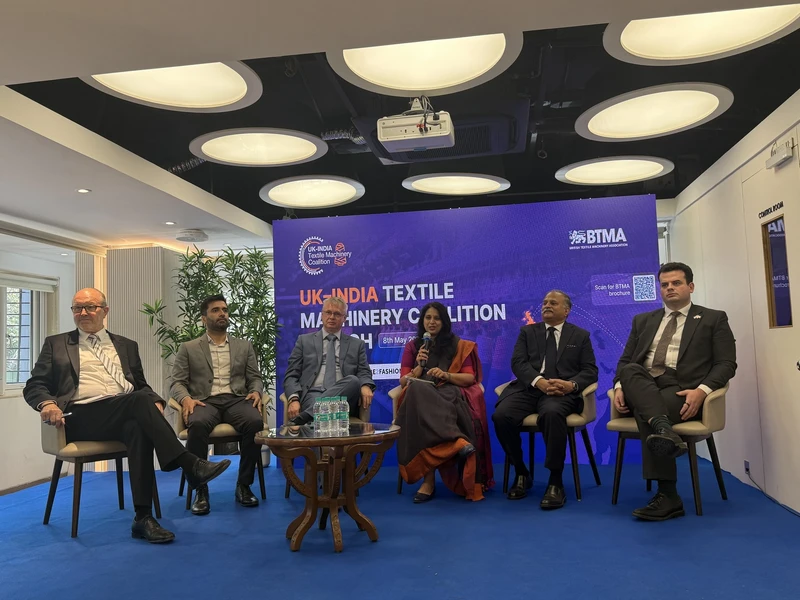
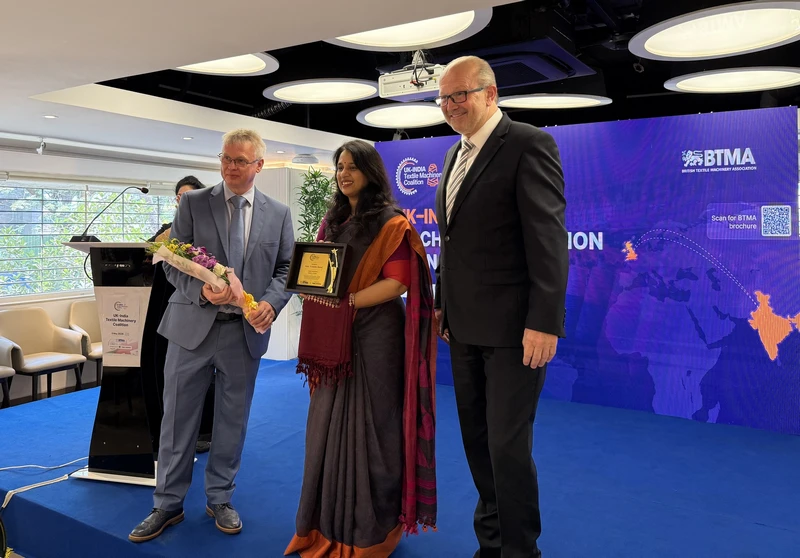
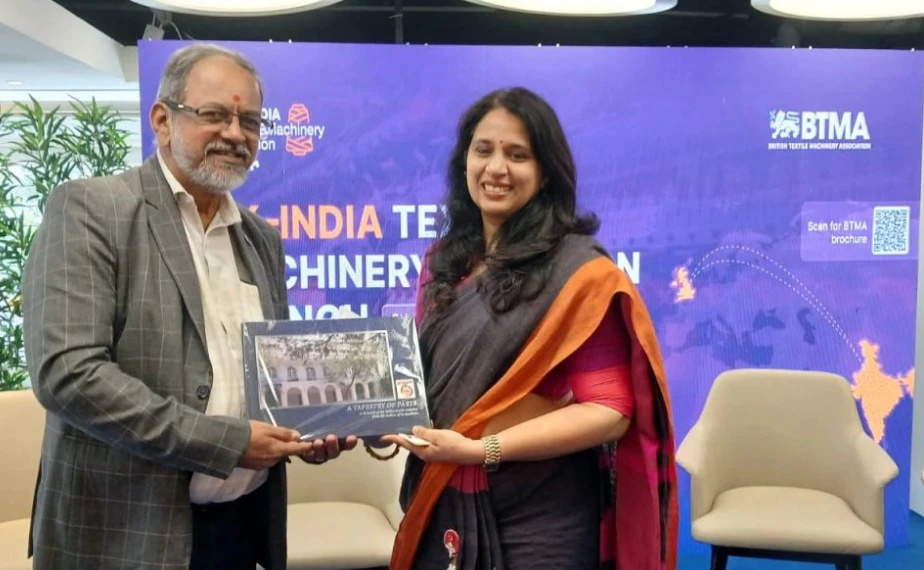
The launch event was inaugurated by Chief Guest Smt. Vrunda Manohar Desai, Textile Commissioner of India. She was joined by Mark Birrell, Trade Counsellor for South Asia from the UK’s Department for Business and Trade (DBT), British Deputy High Commission. Key industry figures present included Jason Kent, CEO of BTMA; Ketan Sanghvi, Chairman of India ITME Society; Mark Jarvis, Chief Strategy Officer of Fibre2Fashion; Amol Monga, Director of Strayfield Ltd; and Prof. Parik Goswami from the University of Huddersfield, who participated virtually.
Strategic Context and Objectives
India’s textile and apparel industry aims for a $350 billion market size by 2030, backed by initiatives like the PM MITRA parks and the Production Linked Incentive (PLI) scheme for technical textiles. With a substantial portion of Indian mills planning machinery upgrades in the next 1–3 years, the UKITMC addresses the critical need for advanced, reliable technology to boost productivity, sustainability, and export competitiveness.
The coalition aligns closely with the operationalization of the India-UK Comprehensive Economic and Trade Agreement (CETA) around May 2026, which eliminates tariffs on 99% of goods. This creates favorable conditions for UK machinery exports while supporting India’s push toward higher-value production, automation, digitalization, and circular economy practices.
Jason Kent of BTMA emphasized that UK machinery is renowned for precision, consistency, and performance, positioning the coalition to help Indian manufacturers transition effectively. Ketan Sanghvi highlighted its role in bridging technology availability and industry adoption. Vrunda Desai stressed the value of global partnerships for India’s modernization journey. Mark Birrell noted the broader UK-India trade momentum, while Amol Monga brought a perspective as an Indian-origin leader in British textile technology, underscoring opportunities for deeper collaboration.
Key Features and Activities
The UKITMC functions as a long-term strategic platform offering multiple engagement formats:
These activities facilitate technology transfer, joint partnerships, knowledge exchange, and evaluation of advanced solutions in areas such as fiber extrusion, digital printing, forensic fabric inspection, energy-efficient machinery, and sustainable practices. It particularly supports the growing technical textiles segment and helps Indian firms meet stringent ESG standards for global markets.
The timing ties in with upcoming events like India ITME 2026, reinforcing its role as a catalyst for ongoing collaboration.
Broader Impact
This coalition goes beyond equipment sales; it embeds Industry 4.0 standards, resource efficiency, and innovation into India’s garment clusters and value chain. It strengthens bilateral manufacturing and technology ties, supports skills development, and positions both countries to compete more effectively in global supply chains.
In the weeks following the launch, the event generated positive coverage across industry media, social platforms, and stakeholder networks, signaling strong interest and momentum. As India executes its textile reset through policy and infrastructure, and the UK leverages its engineering strengths under improved trade terms, the UKITMC stands as a practical, forward-looking mechanism to turn potential into tangible growth for both economies.
Overall, the launch in Mumbai represents not just a ceremonial milestone but the beginning of a sustained, structured partnership aimed at modernizing textile production, fostering innovation, and building resilient, sustainable global supply chains between the UK and India.