Climate Week NYC 2026 in Full Swing at FIT Putting Fashion’s Climate Transition in Focus
New York’s Climate Week 2026 is in full swing, and the Fashion Institute of Technology (FIT) has emerged as an important meeting point for conversations around fashion, materials innovation, sustainable manufacturing and the transition towards a lower-carbon industry. Taking place from September 20–27 alongside the UN General Assembly, Climate Week NYC has brought together more than 100,000 participants through a programme of more than 1,000 events across New York City. This year’s overarching emphasis is on moving from climate ambition to implementation, with particular attention to energy, investment, innovation, supply chains and the practical delivery of climate solutions.
For the fashion industry, the significance of Climate Week has grown considerably. Fashion sits at the intersection of agriculture, fibre production, chemicals, energy, manufacturing, logistics, retail and consumer behaviour, making the sector increasingly central to discussions on climate action. This year’s programme is therefore placing greater emphasis not only on reducing the environmental footprint of fashion, but also on developing new materials, strengthening supply-chain resilience, mobilising investment and creating commercially viable pathways for sustainable technologies. Industry coverage of Climate Week 2026 identifies financing the climate transition, regenerative practices, material innovation, water conservation, decarbonisation and sustainable supply chains among the major themes occupying fashion leaders.
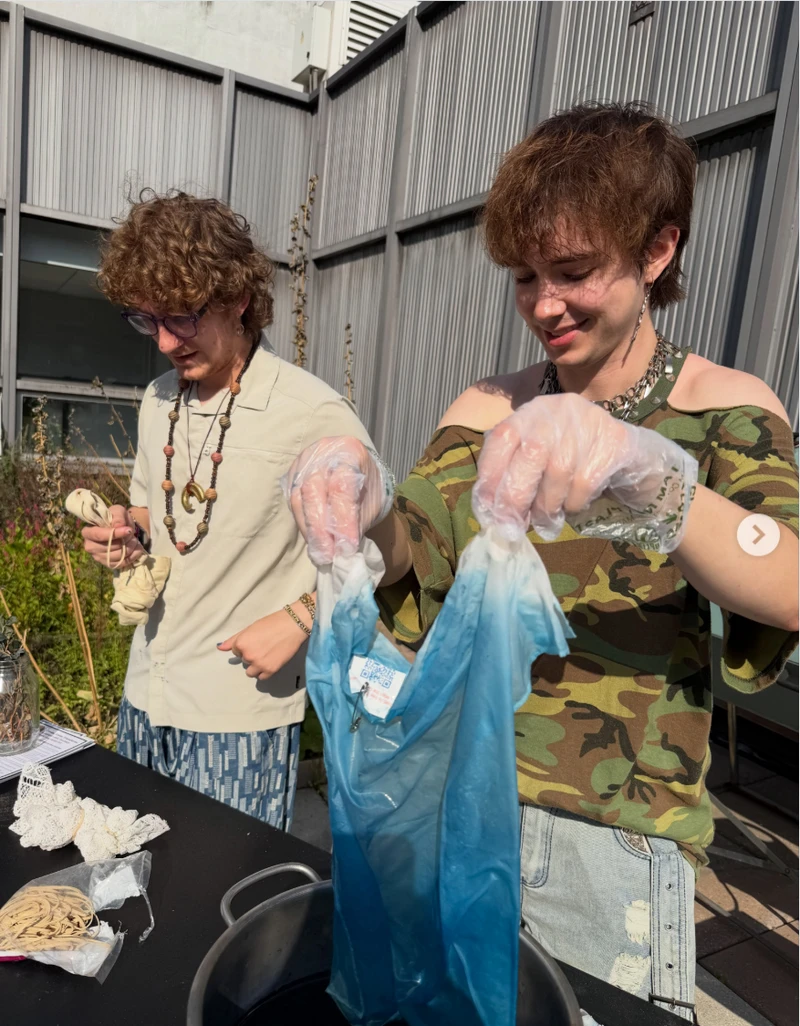
Against this backdrop, FIT provides a particularly relevant setting. The college has spent two decades embedding sustainability into its curriculum, campus operations, research and community engagement. FIT describes sustainability as a core institutional value and has pursued initiatives ranging from green roofs, recycling and natural-dye programmes to energy-efficiency improvements and sustainable materials research. The college reports that it has reduced its carbon footprint by 62 percent since 2001, while its Joyce F. Brown Academic Building has achieved LEED Gold certification.
The importance of that long-term commitment was underscored during Climate Week itself. On September 22, FIT was recognised by New York City’s Mayor’s Office of Climate and Environmental Justice for its leadership in the NYC Carbon Challenge. FIT was one of three institutions honoured for progress in reducing greenhouse-gas emissions, advancing building electrification and supporting decarbonisation in higher education. According to FIT, the college has reduced its carbon emissions by more than 60 percent since joining the NYC Carbon Challenge at its inception in 2007. Its continuing investments include the LEED Gold-certified Joyce F. Brown Academic Building and a new $7 million electric chiller installed in partnership with the New York City Department of Citywide Administrative Services.
FIT’s Climate Week presence has also extended beyond campus operations to one of the most consequential challenges facing the fashion sector: the commercialisation and scaling of next-generation materials. On September 22, the college hosted **“Convening the Next-Generation Materials Transition,”** an invitation-based Climate Week forum held at FIT’s 227 West 27th Street campus. Convened by Eco Age and Spinnova, and developed in collaboration with FIT, Canopy, Fashion for Good, DIRT Charity, Good Earth Cotton and Material ConneXion, the gathering brought together stakeholders from across the fashion and materials ecosystem.
The central message of the forum was that material innovation alone is not sufficient to transform fashion. Breakthrough fibres and materials must move beyond laboratory development and pilot projects into reliable, commercially scalable supply chains. That requires coordinated action by brands, fibre and material innovators, manufacturers, suppliers, investors, standards organisations and NGOs. The FIT-hosted forum therefore focused on commercial adoption, market demand, supply-chain readiness, sourcing, investment, infrastructure, credible standards and cross-industry partnerships capable of accelerating the transition.
The participation of Spinnova added a strong materials-technology dimension to the programme. The Finnish company is developing textile fibre from wood pulp and side streams, and its Chief Commercial Officer Mikko Lassila was among the confirmed speakers. The forum included keynotes, panels, roundtable discussions and networking, with a separate investor session hosted by Spinnova. The format reflected an increasingly important direction in sustainable fashion: shifting the discussion from whether innovative materials can be developed to how they can achieve sufficient scale, performance, supply-chain integration and investment to become meaningful alternatives in the global textile industry.
The emphasis on materials at FIT is particularly timely because the wider Climate Week fashion agenda is moving towards the convergence of climate science, finance, technology and industrial transformation. Earlier in the week, the inaugural **Columbia Fashion, Energy, and Climate Summit** brought together representatives from fashion, energy, technology, business, academia, policy and design to examine how energy systems, materials, markets, finance, regulation, trade and culture are reshaping fashion’s climate future. The programme also examined long-term supply-chain resilience amid changing regulatory and policy environments.
Manufacturing has been another important component of FIT’s Climate Week activity. On September 22, FIT’s Center for Continuing and Professional Studies, together with the Garment District Alliance, hosted the **CitySource Manufacturing Symposium**, bringing manufacturers, designers, brands and students together to examine technological innovations transforming apparel manufacturing. The programme featured four panel discussions and a networking session with local manufacturing businesses. Its focus on the often-overlooked production side of fashion complements the broader Climate Week discussion about how sustainability ambitions can actually be translated into industrial practice.
This focus on the factory floor is significant because the next phase of fashion sustainability will depend increasingly on implementation across manufacturing networks. Energy efficiency, electrification, cleaner production processes, advanced machinery, traceability, waste reduction, material efficiency and digital technologies are becoming integral to the competitiveness of textile and apparel manufacturing. For brands, manufacturers and suppliers, the challenge is increasingly to demonstrate not only environmental intent but measurable improvements in the way products are designed, sourced, manufactured and brought to market.
FIT’s programme also reflects the growing convergence between fashion education, materials science and regenerative approaches to design. On September 24, the college is scheduled to open **“Soil to Surface,”** an exhibition running through November 1 that brings together the work of small-scale women farmers, women’s cooperatives, designers and members of the FIT community. The exhibition explores agricultural waste and local textile materials through contemporary design, technical experimentation and new creative applications. Developed in collaboration with MILKist Social Design Center and presented as part of the “Second Harvest” project with Anadolu Efes and UNDP Türkiye, the exhibition reinforces the idea that sustainability can involve not only reducing harm but also creating new economic and creative relationships between agriculture, materials, craft and design.
The developments at FIT are part of a much broader fashion-focused Climate Week landscape. Across New York, the 2026 programme includes events examining circularity, regenerative textiles, sustainable design, advanced materials, clean energy and climate finance. The official Climate Week calendar includes programmes ranging from the Columbia Fashion, Energy, and Climate Summit to fashion-tech and deep-tech gatherings designed to connect researchers, founders, brands, investors and manufacturers.
What distinguishes the FIT activity is the combination of education, design, manufacturing, material research and practical industry engagement. FIT is not simply serving as a venue for climate conversations; its own sustainability initiatives, educational programmes and materials-related activities provide a working context for the issues being discussed. The college’s recognition under the NYC Carbon Challenge further demonstrates that its climate engagement extends from fashion and design into the operation of a major urban educational institution.
The significance of Climate Week for the textile and apparel industry therefore goes well beyond a series of conferences and panel discussions. The industry is entering a period in which environmental performance, material choices, manufacturing technologies, supply-chain resilience and commercial viability are increasingly interconnected. New fibres and alternative materials need investment and manufacturing capacity; manufacturers need access to commercially viable technologies; brands need reliable sourcing options; investors need credible pathways to scale; and consumers and regulators increasingly demand evidence behind sustainability claims.
FIT’s Climate Week programme captures this transition particularly well. From decarbonising its own campus and advancing sustainable education to convening the next generation of material innovators and exploring new approaches to manufacturing and agricultural materials, the institution is positioning fashion sustainability as a multidisciplinary challenge rather than a standalone design issue.
As Climate Week NYC continues through September 27, the message emerging from FIT and from the wider fashion programme is increasingly clear: the next chapter of sustainable fashion will be determined not simply by new ideas, but by the industry’s ability to connect innovation with investment, supply chains, manufacturing capacity and measurable implementation.
For the global textile and apparel industry, this makes the discussions taking place in New York particularly relevant. The transition towards a more resilient and climate-conscious fashion economy will depend on collaboration across the entire value chain—and institutions such as FIT are increasingly becoming the places where designers, scientists, manufacturers, brands, investors and the next generation of industry leaders meet to turn that transition from an aspiration into practical reality.