The Mega Used Clothes Uncyclon Launched in Mumbai
Mumbai’s Mega Post-Consumer Textile Waste Collection & Upcycling Initiative!
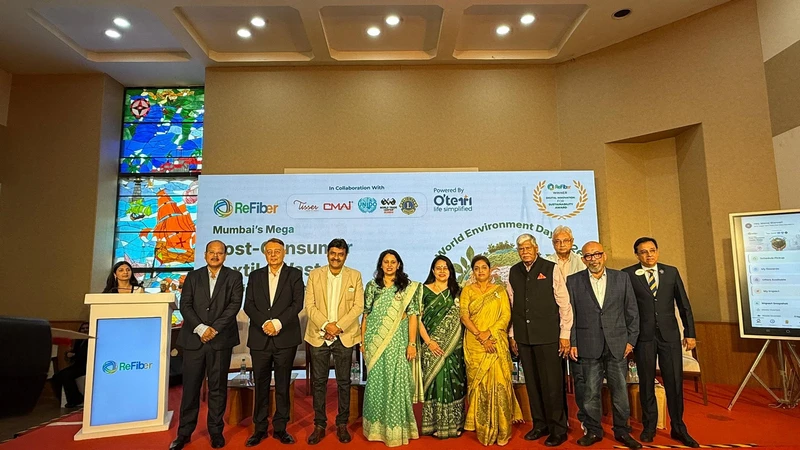
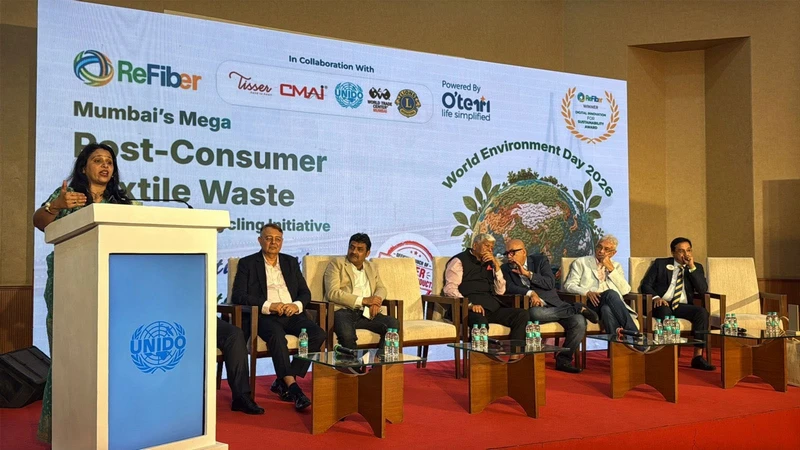
The Mega Used Clothes Uncyclon, launched on the occasion of World Environment Day 2026 in Mumbai, marks one of the most ambitious collaborative initiatives undertaken in India to address the rapidly growing challenge of post-consumer textile waste. Organised by the Clothing Manufacturers Association of India (CMAI) in partnership with the United Nations Industrial Development Organization (UNIDO), ReFiber, OterRi, Tisser Artisans Trust, World Trade Center Mumbai, and Lions International, the programme represents a significant shift in India’s sustainability agenda—from concentrating exclusively on cleaner textile manufacturing to actively involving consumers in creating a circular textile economy. The initiative was inaugurated by Smt. Vrunda Manohar Desai, IRS, Textile Commissioner, Government of India, who highlighted the importance of collaborative action involving government, industry, civil society and consumers in reducing the environmental footprint of the textile and apparel sector.
The significance of the Mega Used Clothes Uncyclon extends far beyond a conventional clothing donation campaign. It reflects a growing recognition that sustainability challenges in the textile industry cannot be solved solely within factories. While considerable investments have already been made in cleaner production technologies, renewable energy, water conservation, sustainable fibres and responsible manufacturing practices, the largest volume of textile waste is generated only after garments have completed their useful life in the hands of consumers. Industry estimates indicate that more than half of textile waste originates at the post-consumer stage, while almost two-thirds of discarded clothing eventually finds its way into landfills or open dumping grounds instead of being reused or recycled. This has transformed post-consumer textile waste into one of the biggest sustainability concerns confronting the global fashion industry.
India occupies a unique position in this discussion. As one of the world’s largest producers of cotton, textiles and apparel, the country simultaneously represents a major manufacturing hub and an increasingly important consumer market. Rapid urbanisation, rising disposable incomes, the growth of organised retail, expanding e-commerce and fast-changing fashion trends have substantially increased clothing consumption across Indian households. Consequently, enormous volumes of garments are discarded every year, many of which still retain considerable reuse or recycling value. Yet an organised ecosystem capable of systematically collecting, sorting, repairing, refurbishing, upcycling and recycling used textiles remains largely underdeveloped. The Mega Used Clothes Uncyclon seeks to bridge this gap by creating a structured pathway through which consumers can become active participants in India’s circular economy.
The term “Uncyclon” itself is intended to communicate a movement that “undoes” the traditional linear model of textile consumption. Instead of following the conventional “buy-use-discard” pattern, the initiative encourages consumers to think of every garment as a valuable resource whose lifecycle can be extended through repair, reuse, upcycling or recycling. This represents a behavioural transformation rather than merely a waste collection exercise. The campaign aims to normalise responsible disposal practices and educate citizens that donating unwanted clothing can significantly reduce environmental degradation while simultaneously creating economic and social opportunities.
Addressing the inaugural programme, Textile Commissioner Smt. Vrunda Manohar Desai emphasised that achieving sustainability requires collective responsibility across the entire value chain. She underlined that governments, manufacturers, brands, recyclers, development organisations and consumers must work together to establish a genuinely circular textile ecosystem. Her remarks reflected the Ministry of Textiles’ broader emphasis on circularity, resource efficiency and sustainable manufacturing as India positions itself as a preferred global sourcing destination in an era increasingly shaped by environmental compliance and responsible production.
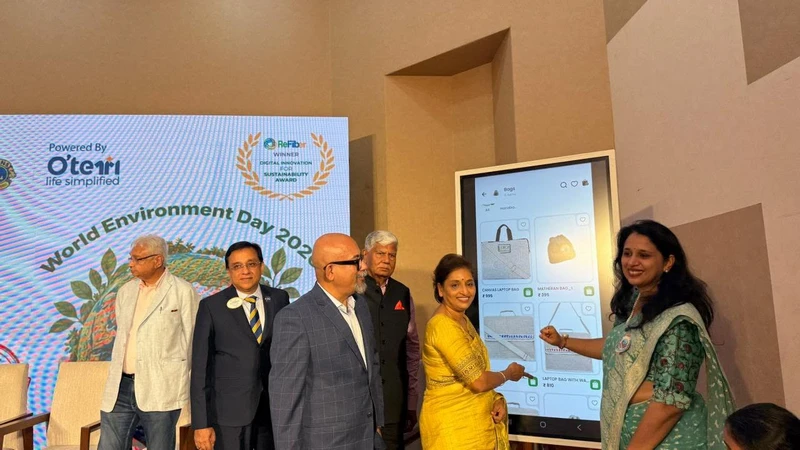
The campaign is built upon a strong multi-stakeholder partnership, with each participating organisation contributing specialised expertise. CMAI, India’s leading apparel industry association representing thousands of manufacturers and brands, provides industry leadership and outreach. UNIDO contributes international experience in sustainable industrial development and circular economy practices. ReFiber, supported by OterRi, brings technical expertise in textile recovery, sorting, recycling and circular value chains. Tisser Artisans Trust connects the initiative with grassroots communities by engaging women artisans skilled in transforming discarded textiles into value-added products. World Trade Center Mumbai contributes institutional support and global networking capabilities, while Lions International mobilises its extensive volunteer network for community participation and awareness generation. Collectively, these organisations create an integrated ecosystem linking consumers, collection agencies, recyclers, artisans and manufacturers.
A major operational objective of the campaign is the collection of approximately 20,000 kilograms of used clothing and household textiles during its initial phase. Rather than treating collected garments as waste, they are intended to undergo systematic segregation based on quality and condition. Wearable garments can be reused or redistributed through appropriate channels, while damaged textiles can be repaired, redesigned or creatively upcycled into new products. Materials unsuitable for reuse can enter fibre recycling streams, thereby extending the useful life of textile resources and reducing dependence on virgin raw materials.
One of the most notable dimensions of the initiative is its strong social inclusion component. Through collaboration with Tisser Artisans Trust, which works with more than 20,000 women artisans and workers, discarded textiles become an important source of livelihood generation. Instead of viewing waste merely as an environmental liability, the programme demonstrates how post-consumer textiles can become economic assets. Women artisans receive opportunities to convert used garments into handcrafted lifestyle products, accessories, home furnishings and other marketable items, thereby generating sustainable incomes while simultaneously reducing textile waste. This integration of environmental protection with women’s economic empowerment distinguishes the programme from conventional recycling initiatives.
The launch also showcased the ReFiber Upcycled Products Marketplace, demonstrating the commercial potential of creatively repurposed textiles. Products displayed by women artisans illustrated that garments reaching the end of their original life can be transformed into attractive, functional and commercially viable products. Such demonstrations play an important educational role by encouraging consumers to appreciate the value embedded in discarded textiles and challenging the widespread perception that used clothing necessarily constitutes waste.
Another important feature of the programme is the establishment of a broad collection network. Reports indicate that around 50 collection points have been established across Mumbai, enabling households, institutions and organisations to conveniently deposit unwanted clothing. Such decentralised collection infrastructure is essential because one of the biggest barriers to textile recycling globally is the absence of organised systems for collecting post-consumer textiles. By creating accessible drop-off points, the campaign reduces this logistical bottleneck and makes responsible disposal significantly easier for citizens.
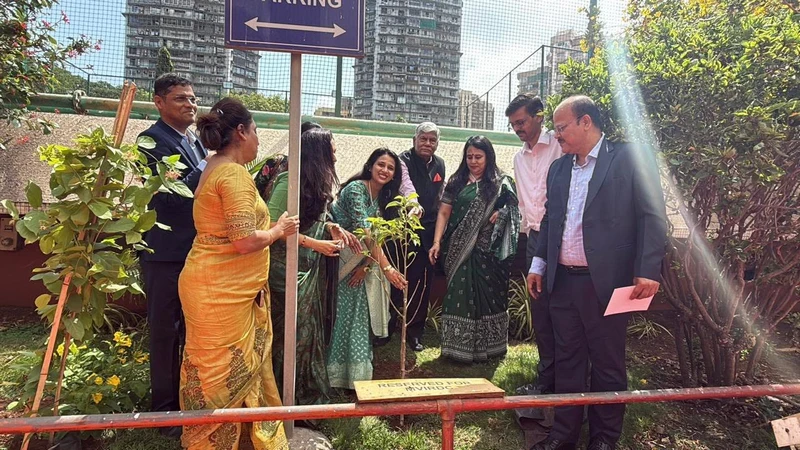
CMAI President Santosh Katariya emphasised during the launch that consumers represent an indispensable stakeholder in the transition towards circularity. According to him, every garment responsibly donated instead of being discarded extends the useful life of valuable textile resources, reduces landfill burden, conserves water and energy embedded in textile production, and lowers greenhouse gas emissions. He stressed that the industry’s investments in sustainable manufacturing can only deliver their full environmental benefits when consumers actively participate in extending garment lifecycles.
Similarly, Naveen Sainani, Honorary General Secretary of CMAI and Chairman of its ESG Committee, highlighted that the programme seeks to build an integrated ecosystem connecting consumers, collection agencies, recyclers, upcyclers and manufacturers. He described the initiative as an illustration of how discarded garments can simultaneously generate environmental, economic and social value while diverting substantial quantities of textile waste away from landfills. His remarks underscored that successful circularity requires coordinated participation by every stakeholder in the textile value chain rather than isolated efforts by individual organisations.
The initiative aligns closely with international sustainability trends shaping the future of the global textile and apparel industry. Across major consumer markets, including the European Union, Extended Producer Responsibility (EPR), mandatory textile waste collection, eco-design requirements, digital product passports and recycled content targets are rapidly becoming integral components of textile policy. Global brands increasingly expect suppliers to demonstrate circularity alongside traditional quality and compliance standards. India’s emergence as a reliable sourcing destination therefore depends not only upon competitive manufacturing but also upon establishing robust systems for textile recovery, recycling and resource efficiency. Initiatives such as the Mega Used Clothes Uncyclon position Indian industry to proactively respond to these evolving global expectations.
The programme also complements ongoing national efforts to strengthen sustainable textile value chains. It forms part of the broader pilot project titled “Sustainability and Circularity in the Textile Value Chain by Managing Post-Consumer Textiles,” supported by the Textiles Committee (Ministry of Textiles) along with partners including the Navi Mumbai Municipal Corporation, SBI Foundation and IDH India. This broader framework seeks to develop replicable models for collection, segregation, recovery, recycling and value addition that can eventually be scaled across other Indian cities.
For India’s textile and apparel industry, the implications of this initiative are far-reaching. The sector has traditionally focused on manufacturing efficiency and export competitiveness. However, international buyers are increasingly evaluating suppliers based on their contribution to circularity, resource conservation and waste reduction. By fostering consumer awareness and establishing organised recovery systems, the Mega Used Clothes Uncyclon helps lay the foundation for a comprehensive circular textile ecosystem capable of supporting fibre-to-fibre recycling, recycled raw material availability and sustainable product development. Such capabilities are likely to become increasingly important as environmental regulations tighten globally.
From an environmental perspective, extending the life of garments through reuse and upcycling significantly reduces demand for virgin fibres, lowers water consumption, conserves energy and minimises greenhouse gas emissions associated with textile production. Every garment diverted from landfill also reduces methane emissions generated through decomposition and lessens the burden on municipal solid waste management systems. Furthermore, recycling fibres decreases dependence on natural resources while promoting greater resource efficiency throughout the textile value chain.
Equally important are the programme’s social outcomes. By integrating informal workers, artisans, community organisations and women’s self-help groups into structured value chains, the initiative demonstrates how sustainability can simultaneously promote inclusive economic development. Textile waste thus becomes a resource capable of generating livelihoods, entrepreneurship and community empowerment alongside environmental benefits.
The Mega Used Clothes Uncyclon therefore represents much more than a symbolic World Environment Day event. It signals the beginning of a nationwide consumer movement aimed at transforming India’s approach to clothing consumption and disposal. By bringing together government institutions, industry associations, international development organisations, social enterprises, artisans and citizens under a common framework, the initiative establishes an important model for collaborative circular economy implementation. If successfully replicated across Indian cities, it has the potential to significantly reduce post-consumer textile waste, strengthen domestic recycling infrastructure, create thousands of green livelihood opportunities and reinforce India’s position as a global leader in sustainable and circular textiles.